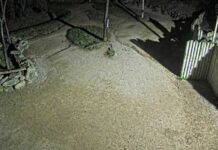
Kuwait’s release of stark security footage pointing to an Iran-linked drone slamming into its main airport forces hard questions about deterrence, civilian safety, and how America should respond to state-backed terror tactics in busy public spaces.
Story Highlights
- Kuwait published multi-angle airport surveillance video of a drone impact at Terminal 1, citing Iranian origin or links [1][3].
- Kuwait reported one person killed, dozens injured, and temporary airport disruption after the strike [2].
- Iranian-aligned denials have surfaced, including a claim blaming a missile interceptor, which the United States publicly rejected in coverage [4].
- The case fits a regional pattern: swift attribution by authorities, immediate denials by the accused, and outside verification battles [2][7][8].
Kuwait’s Footage and Government Framing of Responsibility
Kuwait’s Directorate General of Civil Aviation released surveillance video showing a drone striking Terminal 1 from several angles, providing unusually direct visual evidence of the moment of impact [1][3]. Kuwaiti statements and international coverage describe the object as an Iranian or Iran-linked drone, placing accountability on Tehran-backed actors [2][3]. The footage anchors the public narrative because it documents the event itself, not conjecture. Officials framed the release as part of a transparent account of what hit a civilian airport during regular operations [1][2].
Kuwait reported one death, more than sixty injuries, heavy terminal damage, and a temporary closure that disrupted travel plans and airport services [2][8]. Emergency responders moved quickly to stabilize the site and evacuate passengers amid debris and structural collapse concerns. Authorities emphasized that the attack targeted a civilian hub, highlighting the vulnerability of soft targets to state-directed drones. The incident immediately raised security postures across the region and prompted renewed debate over radar coverage, counter-drone doctrine, and hardening of high-traffic facilities [2].
Competing Claims and the Evidence Gap
Iranian-aligned narratives have sought to deflect blame by suggesting a missile interceptor caused the destruction, a claim amplified in media segments but rejected by United States officials referenced in coverage [4]. The denial has not been paired with verifiable forensic detail such as interceptor fragments, authenticated launch telemetry, or chain-of-custody analysis that would rebut Kuwait’s video record [1][4]. By contrast, Kuwait’s multi-camera footage offers synchronized visual confirmation of a drone’s terminal impact, which strengthens the attribution case pending full wreckage analysis [1][3].
Regional reporting notes that this information contest mirrors prior Gulf incidents where visual evidence, local statements, and allied assessments form the early basis of attribution before technical forensics are released [2]. In practice, that means the attack’s reality is undisputed, while the perpetrator’s identity is disputed by the accused party for strategic reasons. Here, Kuwait’s description, the visible flight path into a civilian terminal, and United States rejection of the interceptor explanation together undercut Tehran’s denials and leave Iran-linked responsibility as the leading account in public view [2][4].
What It Means for U.S. Security, Deterrence, and Policy
American interests face a clear warning: state-backed drones are striking civilian infrastructure, spreading fear, and testing the resolve of partners who rely on U.S. security cooperation [2][8]. For conservatives focused on peace through strength, the path forward includes tighter regional airspace surveillance, faster counter-drone rules of engagement, and penalties that raise the cost of using loitering munitions against noncombatants. The United States can bolster airport defenses, enhance data-sharing with Gulf partners, and expedite counter-drone technologies that defeat low-flying threats before impact [2][8].
A drone strike hit Terminal 1 of Kuwait International Airport, and dramatic surveillance footage shows the exact moment of impact followed by a powerful explosion. The blast caused a section of the terminal roof to collapse and triggered large fires and thick smoke across the… pic.twitter.com/8b1MU14zEI
— The Pioneer (@TheDailyPioneer) June 4, 2026
Policy clarity matters at home too. Taxpayers deserve assurance that funds support concrete deterrence, not open-ended entanglements. The administration should link any assistance to measurable outcomes: more interdicted drones, quicker threat classification, and visible resilience at civilian hubs. Congress should demand transparent reporting, prioritize homeland airport hardening, and ensure that any sanctions or interdictions target the financial and logistical arteries enabling drone production and export. Strength, accountability, and precision—not mission creep—guard both American wallets and lives [2][8].
Sources:
[1] YouTube – Kuwait releases surveillance video of deadly drone strike on its …
[2] Web – Video shows drone strike on Kuwait airport
[3] YouTube – Kuwait Shares Footage Of Iran-Linked Drone Strike On …
[4] YouTube – US Rejects Iran’s Patriot Missile Claim Over Kuwait Airport …
[7] YouTube – Kuwait Releases Video Of Iranian Drone Strike On …
[8] YouTube – Kuwait airport hit by drone as Iran, U.S. trade strikes
© dailyvantage.com 2026. All rights reserved.