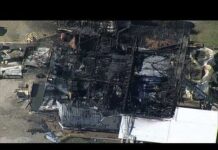
A federal court froze an Army plan to blast unstable lead azide in Iowa after officials admitted a controlled detonation would release lead dust.
Story Snapshot
- A court stay halted an Environmental Protection Agency emergency permit that allowed detonation of 68 drums of lead azide at a military site.
- Government filings acknowledged lead dust would be released, while arguing detonation would minimize it compared with other options.
- The Army says instability made storage risky and that it modeled plumes and built barriers to trap debris and dust.
- Environmental groups warned about potential impacts beyond the base; the case spotlights fast-track “emergency” decisions with limited public input.
What triggered the showdown in Iowa
Army officials at the Iowa Army Ammunition Plant planned to detonate 68 drums of lead azide that had degraded and become unstable. The Environmental Protection Agency issued an emergency hazardous-waste permit on November 13, 2026, that, for the first time, authorized intentional detonation in earth-covered magazines. The permit labeled the material reactive and toxic for lead and required plume and deposition modeling before any blast. Petitioners sued and won a temporary hold on the permit.
The federal government told the court that any controlled detonation would release lead dust but argued that a managed blast would reduce total release and risk compared with an uncontrolled explosion. That admission confirmed a real exposure pathway while framing detonation as the least-bad option under the conditions. The dispute turned on comparative risk, legal authority for emergency treatment, and whether the record supported bypassing standard review steps.
How the Army says it would limit harm
The Army stated it evaluated chemical neutralization, thermal treatment, relocation, and continued storage before choosing a controlled, mitigated detonation. Officials said they built sand-filled barriers, used soil backfill, and planned water, gels, and foams to limit blast force and trap debris. They also cited atmospheric-dispersion modeling to design the operation and select timing based on weather, with coordination across federal, state, and local agencies.
Those measures, described in public advisories, aim to keep lead particles from traveling far and to protect the surrounding area. The Environmental Protection Agency permit required modeling of airborne plume migration and surface deposition. It also adopted a conservative emissions factor because the dust-reduction effects of the barriers and wetting agents had uncertainty. That approach sought to plan for a worst-case range in the design and review steps.
Why residents and advocates pushed back
Environmental groups argued that detonating tons of lead-bearing explosive could spread contamination beyond the base, including onto farms. The Eighth Circuit Court of Appeals accepted their petition and granted a stay, signaling that their claims about emergency authorization and potential exposure were substantial enough for review. News reports captured those concerns and the practical worry that once lead dust is released, the action cannot be undone.
Two explosions in southeastern Iowa signaled the detonation of nearly 10,000 pounds of lead azide on Wednesday. Here's what to know about its effects. https://t.co/TJMsbEkkCV
— Omaha World-Herald (@OWHnews) November 25, 2026
The deeper fight reflects a pattern Americans know well: agencies cite urgent danger to justify emergency action, while the public worries that speed reduces transparency and limits choices. The permit itself shows the bind. It recognizes both reactivity and lead toxicity, yet advances a plan that admits a dust release. That tension fuels mistrust across party lines, where many believe powerful institutions act first and explain later, often near farms and working towns.
What remains unknown and what comes next
Available records do not show post-detonation sampling, blood-lead results, or proof of farm contamination. The case file does not yet establish that neutralization, relocation, or continued storage would be safer. Supporters of the plan point to instability risks and the Army’s modeling and mitigation. Critics ask for fuller administrative records, alternatives analysis, and notice. The court process will test the emergency findings and the evidence agencies used to choose detonation.
Why this matters beyond Iowa
Federal rules generally discourage open burning and detonation but allow it for waste explosives that cannot be safely treated another way. That carveout creates a recurring conflict between urgent safety claims and the public’s right to weigh lasting environmental tradeoffs. People across the spectrum see a government that moves fast when it must, yet often leaves communities with the risks and the doubts. Clear records, open data, and measured oversight are the path to rebuild trust.
Sources:
ecf.ca8.uscourts.gov, d34w7g4gy10iej.cloudfront.net, courtlistener.com, storage.courtlistener.com, us.cnn.com, army.mil
© dailyvantage.com 2026. All rights reserved.