(DailyVantage.com) – Iran is openly daring the U.S. Navy in the world’s most critical oil chokepoint—raising the stakes for American security and the price Americans pay at the pump.
Quick Take
- Iranian military adviser Mohsen Rezaei said Iran would sink U.S. ships if Washington tries to “police” the Strait of Hormuz.
- U.S. officials say American destroyers have transited the strait safely, while Iranian media claims a U.S. vessel was warned off—an account the U.S. disputes.
- With roughly one-fifth of global oil moving through Hormuz, even a miscalculation could ripple into energy prices and inflation.
- Iran’s leverage includes asymmetric options—missiles, mines, and proxy pressure—rather than a conventional naval fight.
Iran’s Threat Focuses on U.S. “Policing” of Hormuz
Iranian state television carried remarks from Mohsen Rezaei—described as a top military adviser to Iran’s Supreme Leader and a former IRGC commander—warning that U.S. ships would be targeted if the United States attempts to “police” the Strait of Hormuz. Rezaei argued U.S. vessels could be exposed to Iranian missiles and framed Washington’s posture as an unacceptable assertion of control. The statement also signaled resistance to extending a fragile ceasefire.
Rezaei’s comments matter because Hormuz is not just a symbolic battleground; it is a narrow passage where a political message can quickly become a tactical incident. Iran’s leadership has historically used threats around maritime choke points to project strength at home and intimidate neighbors abroad. The problem for everyone else is that words in this environment can prompt real-world changes—higher alert levels, tighter rules of engagement, and more chances for a split-second mistake.
What the U.S. and Iran Dispute About Recent Transits
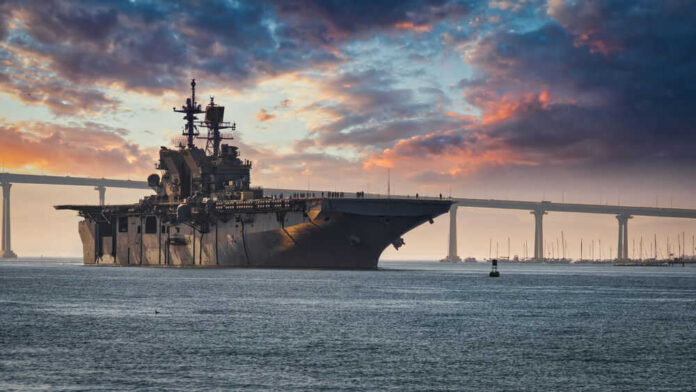
Reports diverge sharply on what happened in the days around the threat. U.S. officials have indicated American guided-missile destroyers conducted freedom-of-navigation transits through the strait without incident. Iranian media outlets, by contrast, claimed a U.S. vessel received a time-limited warning and turned back—an assertion U.S. officials dispute. This kind of information warfare is common in maritime standoffs, where each side tries to look dominant without triggering open combat.
The unresolved gap between “routine transit” and “forced retreat” is not a minor detail; it shapes deterrence. If Iran convinces regional audiences that it can push U.S. ships around, Tehran gains leverage without firing a shot. If the U.S. demonstrates consistent passage, it reinforces the long-standing principle of freedom of navigation—an idea conservatives often view as central to projecting American strength and protecting global commerce. Either way, the fog of claims and counterclaims raises the risk of miscalculation.
Why Hormuz Remains the World’s Most Dangerous Energy Chokepoint
The Strait of Hormuz is roughly 21 miles wide at its narrowest and carries about 20% of global oil flows, making it one of the few places where a regional confrontation can instantly become an economic shock. The strait has been contested since the 1979 Iranian Revolution, with Tehran asserting territorial influence and Washington emphasizing international transit rights. Even without a shot fired, heightened threats can raise shipping costs, insurance premiums, and market volatility.
For U.S. households, the energy angle is not abstract. When global crude prices spike, gasoline and diesel often follow, feeding broader inflation that hits retirees and working families hardest. Conservatives who already distrust overspending and monetary mismanagement tend to see energy disruption as a self-inflicted wound when policy choices restrict domestic production. Liberals may emphasize avoiding escalation, but the immediate vulnerability remains: a narrow waterway thousands of miles away can still squeeze American budgets at home.
Iran’s Likely Playbook: Asymmetry and Proxies Over Direct Naval Battle
While Rezaei’s rhetoric talks like a conventional showdown, the research points to asymmetric pressure as Iran’s more plausible path—missiles, mines, harassment, and proxy escalation. One expert assessment highlighted concern about widening the threat from Hormuz to other chokepoints through allied groups, a strategy that would stretch U.S. and partner resources. The broader trend is familiar: when an adversary can’t win head-to-head, it looks for cheaper ways to disrupt trade and test political will.
Policy-wise, the immediate U.S. objective is straightforward: keep commercial lanes open and deter attacks without stumbling into an avoidable war. The political challenge is harder. In 2026, with Republicans controlling Washington and Democrats eager to portray any confrontation as reckless, every movement in the Gulf becomes part military calculation and part domestic messaging battle. What’s clear from the available reporting is that the strait remains a flashpoint where rhetoric, perception, and markets can move faster than diplomats.
Sources:
Iran Military Adviser Threatens to Sink US Ships if Washington ‘Polices’ Hormuz
Iran claims it warned off US naval ships in the Strait of Hormuz; US denies report
Gate of tears risk? Iran threatens major new global chokepoint as US moves in Hormuz
Copyright 2026, DailyVantage.com