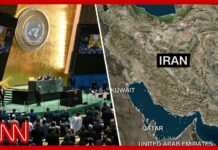
As the United States and Iran trade missile barrages across the Middle East, a war that started as “retaliation” now looks dangerously like an open-ended clash driven more by politics and pride than by any clear plan to keep Americans safe.
Story Snapshot
- The United States is launching repeated strikes on Iran after missile attacks on U.S. forces and bases in Jordan.
- Iran is firing ballistic missiles at U.S. bases and partners, claiming retaliation for earlier American attacks.
- U.S. Central Command says its strikes aim to protect shipping in the Strait of Hormuz and defend American troops.
- Each “defensive” move by one side becomes the next excuse for “retaliation” by the other, trapping both in a cycle of escalation that offers little hope for a quick peace.
Missile Exchanges Across the Region
United States forces have been hitting Iranian military targets night after night, saying they are answering missile strikes on U.S. bases in Jordan. Central Command reports attacks on coastal surveillance, air defense systems, missile and drone depots, and naval assets meant to cut Iran’s ability to threaten ships near the Strait of Hormuz. These strikes follow deadly Iranian missile attacks that killed American service members at a base in Jordan and shattered short pauses in the fighting.
Iran is not standing down. Tehran’s forces have launched ballistic missiles at Jordan’s Muwaffaq Salti Air Base and other U.S.-linked sites, sometimes firing volleys of five or more missiles at once. Jordanian air defenses and U.S. systems have intercepted many of these missiles, but not all. Some attacks have caused deaths and injuries among U.S. troops, while others sent sirens blaring across Jordan and nearby countries as shrapnel fell but did not cause major damage. Iran also claims strikes on Jordan, Qatar, Kuwait, and Oman after earlier U.S. raids.
Each Side Calls Its Strikes ‘Defensive’
U.S. officials say their actions are necessary self-defense. Central Command states the strikes are designed to punish forces from Iran’s Islamic Revolutionary Guard Corps that attacked Americans in Jordan and to “further degrade” Iran’s ability to threaten commercial shipping. They frame every volley of cruise missiles and bombs as a response to Iranian aggression and an effort to keep trade lanes open for global energy and to protect U.S. personnel from further surprise attacks. For many Americans, this matches long-standing promises to be tough on hostile regimes.
Iran tells a different story to its own public and the region. Iranian officials and state media claim they are answering U.S. attacks on Iranian soil and at sea, including strikes on coastal defenses, air defenses, and small boats used by Iranian forces. They describe their missile launches at U.S. bases and allied countries as retaliation for American operations that they say violate previous understandings and block Iran’s access to regional waters. In this view, Washington is the one escalating, and Iran is proving it will hit back when attacked, even if that risks wider war.
A Repeating Cycle With No Clear Exit
News reports from across the political spectrum show a repeating pattern: Iran fires missiles or hits ships, the United States answers with large strikes, Iran then retaliates again, and so on. One round of U.S. attacks hit about 80 to 90 targets along Iran’s coast; another hit around 140 sites linked to missile, drone, and naval operations. Iran has responded with missile salvos at Jordan and other states hosting or supporting U.S. forces. Mediators keep urging both sides to respect ceasefire deals and memorandums of understanding, but each new strike makes those diplomatic efforts weaker.
🚨 IS TRUMP’S “WE’RE GOING TO BEAT THE F**** S*** OUT OF THEM” THREAT A STRATEGY OR PROOF THE IRAN WAR HAS NO EXIT?
Donald Trump says the United States will respond with overwhelming force after another Iranian attack targeted U.S. forces in Jordan:
“We’re going to beat the… pic.twitter.com/HwdiaAYWiT
— Reality Report News (@X_RealityReport) July 30, 2026
This cycle speaks to a deeper problem many Americans see at home. Both conservatives and liberals are tired of wars that seem to drag on without a clear end or benefit to ordinary citizens. They watch leaders and military planners exchange “retaliation” after “retaliation” while basic needs at home—stable prices, secure borders, decent jobs—feel ignored. The same elite national security system that sold past wars now appears locked into another grinding conflict, with little open debate about long-term costs or a realistic exit plan.
Risks for Americans, Allies, and the Global Economy
These barrages are not just distant fireworks. The Strait of Hormuz is a narrow waterway that carries a huge share of the world’s oil and gas. Repeated attacks on commercial vessels and threats to shut down energy exports could spike fuel prices and feed inflation, hitting American families and small businesses that already feel squeezed. Every missile exchange near key shipping lanes raises the chance of miscalculation, damage to civilian ships, or wider regional war dragging in more countries and costing more lives.
There is also the human cost on the ground. U.S. service members have already been killed or wounded at bases in Jordan. Iranian fighters and nearby civilians are at risk from large waves of U.S. strikes that hit dozens or even hundreds of targets. Ordinary people in Jordan, Qatar, Kuwait, and Oman now live with sirens, falling debris, and fear of the next barrage. While leaders trade tough words and speak of “retribution,” families on all sides cope with loss, anxiety, and uncertainty about a future that seems controlled by distant elites and military commands rather than by democratic debate.
What This Conflict Reveals About U.S. Power
For many Americans who distrust the “deep state,” this war reinforces a growing belief: the federal government can mobilize huge force abroad, but struggles to solve problems at home. The same system that can coordinate missiles, fighter jets, and naval blockades across time zones cannot seem to control spending, manage borders, or keep energy prices stable. Watching nightly reports of “heavy” strikes on Iran, some see proof that Washington’s priorities tilt toward global power games over the everyday needs of the people who pay the bills and send their children into harm’s way.
Others worry that this open-ended confrontation could lock the United States into yet another long conflict in the Middle East. Each side says it is acting defensively, yet the net result is steady escalation, growing risks for U.S. troops, and more strain on alliances and the world economy. Without a clear public plan for de-escalation, accountability, and a realistic peace path, Americans across the political spectrum may see this missile war not as a necessary shield, but as one more sign that the people in charge are playing with fire while the country’s core promises—security, opportunity, and self-government—burn in the background.
Sources:
cfr.org, reuters.com, cnbc.com, apnews.com, cnn.com, pbs.org, youtube.com, theguardian.com
© dailyvantage.com 2026. All rights reserved.