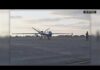
A Romanian F-16 fired an air-to-air missile to bring down a drone after it crossed deep into Romania’s airspace, forcing NATO jets to scramble and raising hard questions about Europe’s security control.
Story Snapshot
- Romania says radar tracked a drone across its territory before an F-16 shot it down safely.
- President Nicușor Dan confirmed the intercept and said the area was uninhabited.
- Italian Eurofighter Typhoons also scrambled, showing a live air-defense response.
- Attribution to Russia is stronger in later reports, but the first incident’s origin was still under review.
What Romania Says Happened In Its Skies
Romania’s Ministry of National Defense reported that radar detected a drone heading west from the Black Sea, crossing national airspace on a path that included Sulina and other points inland. The military said a Romanian F-16 engaged the target with an air-to-air missile over an unpopulated area, preventing harm on the ground. The ministry described a long track across Romanian territory, indicating a real breach rather than a border graze.
President Nicușor Dan publicly confirmed the shootdown and stressed safety. He said the pilot fired because the area was uninhabited, which reduced risk to people below. His statement framed the incursion as a serious sovereignty violation of a North Atlantic Treaty Organization (NATO) member. Later Romanian comments used even tougher language about repeat breaches, signaling a policy of zero tolerance for drones inside national borders.
NATO Aircraft Scramble And Why It Matters
Italian Eurofighter Typhoons joined the response from a base on Romania’s coast, alongside Romanian F-16s, showing that allies treated the event as a live threat. That scramble matters for deterrence and for politics. It shows NATO’s air-policing system is active and ready. It also highlights a trend: more frequent drone incidents along the alliance’s eastern edge, which keep pressure on defense budgets and test command decisions in real time.
This shootdown did not occur in a vacuum. Romania has logged multiple airspace incidents since the wider war began. In the days after the first intercept, officials reported additional downings. By then, some investigators described at least one recovered drone as Russian-made, and leaders called the recurring breaches “intolerable.” That sequence strengthened public attribution over time, even as technical forensics from the first case were still being assembled.
Attribution, Evidence Gaps, And Public Trust
Early official statements did not prove the first drone’s origin. Reporters noted that the government said the origin was under investigation while debris analysis continued. Later briefings linked other downed drones to Russian models, but those were presented as follow-on findings, not instant field IDs. That timeline shows a gap between operational certainty used to act fast and forensic certainty needed to answer who sent the drone and why.
NATO fighter jet shoots down drone over Romania – https://t.co/JBNOCmCcOR https://t.co/yKqoLVYgxS
Follow @NewsHubGlobe for 24/7 breaking news from around the world. pic.twitter.com/YglDHSxu3A
— News Hub (@NewsHubGlobe) August 17, 2026
Moscow denied responsibility and called the claims groundless. Russian officials suggested the events were staged and tied to support for Kyiv. Such pushback is common in information battles, but it also lands because forensic details remain mostly undisclosed to the public. That puts citizens in a bind. People see real intercepts and growing risks, yet they rarely get raw radar tracks or debris reports that could close the trust gap.
Why Americans Should Care About This Pattern
Romania’s split-second call echoes a broader problem that many Americans see at home: leaders often ask for trust without sharing proof. On one hand, a nation must defend its airspace. On the other, repeated secrecy feeds doubt across party lines. Conservatives fear a slippery slope to bigger wars and higher costs. Liberals fear mission creep and unequal burdens. Everyone sees elites making choices behind closed doors while working families carry the risks and the bill.
What To Watch Next
Watch for Romania to release radar plots, engagement logs, and debris photos. Those records would confirm the path and help identify the drone’s make and launch point. Also track whether NATO updates rules for when to fire and how to share evidence with the public. Clearer proof can calm doubts without weakening defense. If incidents grow, expect new funding pushes for air defense and more allied patrols along the Black Sea corridor.
Sources:
© dailyvantage.com 2026. All rights reserved.