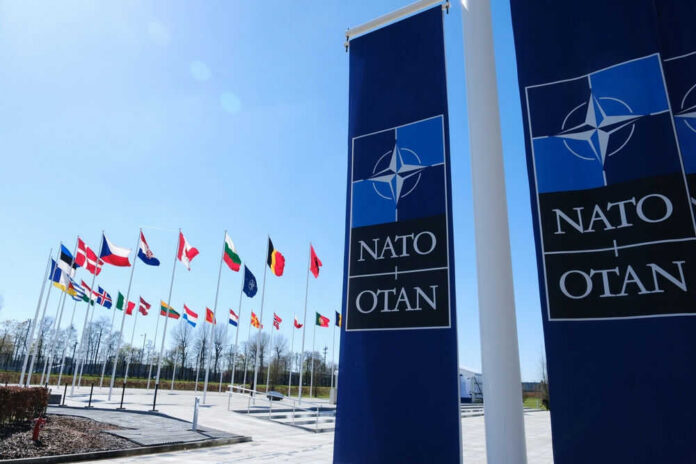
(DailyVantage.com) – Europe is racing to build a “Plan B” for security as trust in America’s NATO guarantees turns conditional—and allies start acting like Washington could walk away.
Quick Take
- European leaders and analysts say U.S. policy under Trump’s second term has accelerated Europe’s push for “strategic autonomy” in defense, energy, and trade.
- Trump’s decision to pursue direct U.S.-Russia talks on Ukraine, paired with sharp rhetoric about NATO, intensified fears that U.S. commitments could become transactional.
- Polling cited in recent analysis shows U.S. favorability in parts of Europe collapsing into the low teens, signaling a deeper political break than a single policy dispute.
- Europe has manpower and wealth to defend itself on paper, but experts argue coordination, command structure, and industrial scaling remain the hard problems.
Trump-era signals reshape Europe’s security assumptions
President Donald Trump’s second-term approach to alliances is forcing Europe to confront an uncomfortable reality: the U.S. security umbrella is no longer treated as automatic. Analysts point to Trump’s February 2025 announcement of direct U.S.-Russia negotiations on ending the Ukraine war—without Europe or Ukraine at the table—as a major inflection point. U.S. messaging afterward reinforced the idea that alliances are leverage, not legacy.
Europe’s reaction has not been limited to speeches. Governments have accelerated defense planning while trying to reduce vulnerabilities in energy and supply chains that can become bargaining chips during crises. For many European officials, the headline risk is not only a reduced U.S. footprint, but the uncertainty itself—whether Washington would respond quickly in a Baltic emergency, or attach new conditions to NATO’s core commitments when it matters most.
Europe has forces and money, but lacks unified wartime machinery
Several assessments underline that Europe is not defenseless. Non-U.S. NATO members collectively field more than a million troops, and Europe retains modern weapons, advanced technology, and deep capital markets. The problem, specialists argue, is less about raw potential and more about how quickly Europe can organize that potential into a coherent deterrent—integrated command, ammunition stockpiles, interoperable systems, and a defense-industrial base sized for sustained conflict.
That gap explains why “strategic autonomy” is increasingly framed as a practical effort to build a stronger European pillar within NATO rather than a dramatic, overnight divorce. Some NATO-linked commentary suggests a reformed alliance in which Europeans carry more responsibility could be achievable within roughly a decade, while full independence would take much longer because it requires deeper political integration and standardized procurement across countries with different threat perceptions and budgets.
Public opinion turns sour as elites hedge against Washington
Political trust is eroding alongside military planning. One analysis citing YouGov polling describes U.S. favorability in major European countries dropping into the 10–15% range, with only about a quarter viewing the U.S. as “friendly,” down sharply from 2024. That matters because defense commitments are ultimately political; when publics stop believing the alliance is stable, leaders move from cooperation to hedging—building parallel structures that can function with less U.S. input.
A new transatlantic bargain—or a slow-motion split
Trump’s public criticism of NATO allies—paired with warnings from U.S. defense leadership that America’s presence is not guaranteed “forever”—has pushed Europe toward choices it long postponed. Some observers argue these shifts become harder to reverse each month as Europe invests in different procurement paths, intelligence arrangements, and contingency planning. Others still see room for a renegotiated partnership built on burden-sharing rather than dependency, especially if Europe demonstrates credible capability.
US should absolutely stop wasting money and resources on Europe. Without America, half of you would still be doing seig heils on the streets, and the other half would still be under some form of Stalinist communism. You are an ungrateful bunch and the days of free lunches are…
— PersianZionist2000 (@PersianZionist5) May 2, 2026
For Americans, the debate cuts both ways. Conservatives skeptical of globalism hear a familiar argument: Europe is wealthy and should handle more of its own defense instead of relying on U.S. taxpayers. Critics of the administration worry a fraying alliance could invite miscalculation by adversaries. What remains clear from the available reporting is that Europe is already behaving as if Washington’s guarantees are no longer a law of nature—and that shift, once embedded, is difficult to unwind.
Sources:
Europe Without America (INSEAD Knowledge)
NATO Without the US: Could Europe Actually Defend Itself? (Atlas Institute)
How Europe is moving on without the US (Aspenia Online)
A West Without America? (CEPA)
Copyright 2026, DailyVantage.com