(DailyVantage.com) – Israel’s own former top security leaders are warning that a quiet rule change in the West Bank could blow up regional stability and put President Trump in the middle of a high-stakes clash.
Quick Take
- Roughly 600 former Israeli defense and security officials say new West Bank land-purchase rules amount to “creeping annexation” and threaten Israeli security.
- The Israeli government moved to repeal or streamline approvals previously required from multiple bodies, including the IDF legal division and the Palestinian Authority.
- President Trump has publicly reiterated opposition to annexation, with U.S. officials stressing that West Bank stability aligns with regional peace goals.
- Arab governments and Palestinian leaders condemned the changes, warning they accelerate settlement expansion and displacement.
What Israel Changed—and Why Ex-Commanders Say It Matters
Israel’s government announced new steps to repeal or streamline regulations that previously required multiple approvals for land purchases and construction in the West Bank, including review by the IDF legal division, Israel’s Civil Administration, and the Palestinian Authority. Commanders for Israel’s Security (CIS), a group of former defense officials, argues the shift “privatizes” land purchases and effectively transfers powers from the Palestinian Authority in areas where Oslo-era arrangements created limits.
CIS says the move amounts to gradual, de facto annexation—changing realities on the ground through bureaucracy rather than a formal declaration. That distinction matters because it can expand control while reducing political accountability for the broader consequences. For Americans watching from afar, it’s a reminder that sweeping policy outcomes often come from technical rule changes, not just headline-grabbing votes—and those downstream effects can reshape diplomacy quickly.
The Trump Factor: Public Opposition Meets Regional Fragility
The timing raised eyebrows because the announcement came as Prime Minister Benjamin Netanyahu prepared to meet with President Donald Trump. Trump told Axios, “I am against annexation,” adding that the administration has “enough things to think about now” without “dealing with the West Bank.” A White House official also emphasized that West Bank stability helps keep Israel secure and supports the administration’s peace goals.
CIS warned that moving ahead anyway risks needless friction with Washington at a time when Israel seeks U.S. support across multiple regional challenges. The research also notes a core uncertainty: even with Trump’s public opposition, the administration has been described as more tolerant of incremental expansion than prior U.S. administrations. That gap between stated policy and practical leverage is exactly where allies can miscalculate—especially when domestic coalition politics push for faster action.
Security Establishment Warning: Manpower, PA Destabilization, and Gaza Spillover
The heart of CIS’s argument is security-first, not rhetorical. Former Israeli security leaders say expanded private land claims and new construction will require additional IDF and Shin Bet resources to protect property and settlements—during a period of manpower strain across multiple fronts. They also argue that undermining the Palestinian Authority’s role and revenue base could weaken PA security cooperation that Israeli defense professionals have long considered operationally valuable against Hamas and other terror threats.
CIS further warned the policy could complicate efforts connected to a Gaza ceasefire’s next phase and President Trump’s reported “20-point Gaza plan,” because West Bank escalation can quickly reverberate into broader conflict dynamics. The sources do not provide granular operational data on force levels or specific deployments, but the causal logic outlined by former commanders is straightforward: more contested sites, more protection requirements, and more flashpoints—all while Israel and the region remain on edge.
Regional Backlash and the Abraham Accords Pressure Test
International reaction came fast. Palestinian Authority President Mahmoud Abbas condemned the changes as an attempt to legalize settlement expansion, land confiscation, and home demolitions, and called for intervention through the UN Security Council and the United States. Hamas issued its own statement, describing the Israeli steps as part of a broader annexation plan intended to change “geographical and legal facts on the ground,” paired with military pressure.
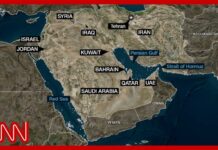
Foreign ministers from Saudi Arabia, Jordan, the UAE, Qatar, Indonesia, Pakistan, Egypt, and Turkey issued a joint condemnation, calling the measures illegal and aimed at accelerating annexation and displacement. Separate analysis highlighted the potential fallout for the Abraham Accords, describing annexation as a major stress test for normalization. According to that research, Saudi and UAE leadership have discussed that pulling back from the accords could become a “realistic” option if annexation proceeds—an outcome that would reshape regional diplomacy.
Why This Matters for Americans Following U.S. Foreign Policy in 2026
The U.S. angle is less about taking sides in Israeli domestic politics and more about clarity in American policy goals. The Trump White House is signaling it wants stability in the West Bank to support broader peace efforts, while Israeli coalition pressures are pushing policy changes that former Israeli security officials say could spark the opposite. When allies move quickly on contested territory, Washington often ends up managing blowback—diplomatic, security, and economic.
The research also underscores a key limitation: predictions about a Palestinian Authority collapse or political timelines inside Israel are described as uncertain, not settled fact. What is clear is the immediate collision between administrative steps on the ground and diplomatic objectives at the top. For conservative Americans who value order, sovereignty, and credible governance, the takeaway is simple: policies that erode stability can empower radicals and force larger government responses later—often at a higher cost.
Sources:
Ex-IDF Leaders Warn PM: West Bank Annexation Harms Security
Israel West Bank “annecation” / Trump — Drop Site Daily
US stresses opposition to annexation after Israeli steps to expand West Bank grip
Copyright 2026, DailyVantage.com