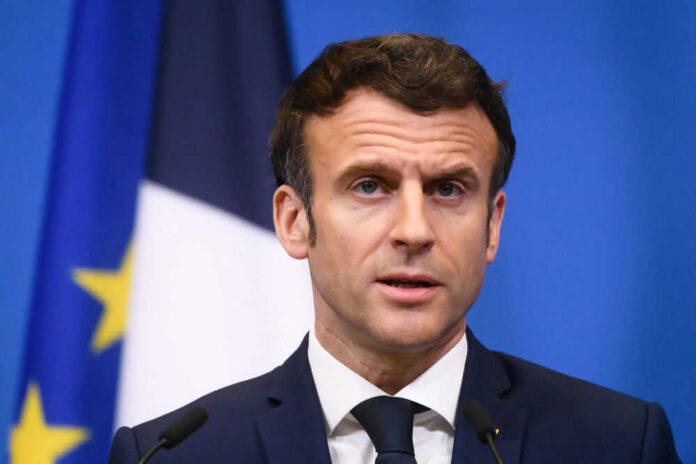
(DailyVantage.com) – France’s president just mocked the very idea of “free speech” online—while pushing a Europe-style model that can easily slide into speech control by bureaucracy.
Quick Take
- Emmanuel Macron, speaking Feb. 18, 2026 in New Delhi, dismissed social media’s “free speech” argument as “pure bullshit,” framing the dispute around opaque algorithms.
- Macron argues platforms should be forced toward “transparent” content systems, saying today’s algorithmic curation can steer users toward hate without their knowledge.
- The remarks land amid a widening U.S.–EU fight, as the Trump administration positions itself as a defender of digital free expression against European regulation.
- Macron’s prior “anti-disinformation” campaign in late 2025 sparked backlash in France, with critics warning it resembled a “ministry of truth,” even as he denied censorship plans.
Macron’s New Delhi Quote Triggers a Familiar Free-Speech Flashpoint
Emmanuel Macron delivered the line that’s now ricocheting worldwide during a Feb. 18, 2026 address in New Delhi: he labeled the “free speech” defense commonly invoked by social media companies as “pure bullshit.” Reporting cited his target as the machinery behind speech distribution rather than speech itself—specifically, the nontransparent algorithms that decide what users see. Macron’s stated remedy is not fewer rules, but more mandated visibility into how platforms curate content.
Macron’s framing matters because it reshapes the debate from “censorship versus liberty” into “transparency versus manipulation.” In practice, transparency mandates can still become regulatory leverage over what information circulates, because governments often define what counts as harmful, misleading, or socially unacceptable. The research available does not provide detailed enforcement proposals for Macron’s “free algorithms” idea, leaving unanswered how regulators would police compliance without pressuring platforms to suppress disfavored speech.
Europe’s Regulatory Push Collides With Trump’s Digital Free-Expression Stance
Macron’s comments arrived as European leaders weigh stronger digital rules, including proposals discussed in multiple countries to restrict minors’ access to social media. The reporting describes Macron anticipating conflict with the Trump administration over European digital-service regulation and possible consequences for countries pressing ahead. On the U.S. side, the research cites actions and rhetoric from President Trump’s team portraying European regulation as part of a broader censorship effort rather than neutral “safety” governance.
Secretary of State Marco Rubio, according to the provided reporting, has framed U.S. actions as pushback against a “global censorship-industrial complex,” including bans aimed at former European officials and pro-censorship activists who sought to police online speech. Vice President JD Vance previously sharpened the same theme at the Munich Security Conference by accusing the EU of suppressing free speech and warning that cultural retreat from fundamental values is a greater threat than foreign adversaries like Russia or China.
Macron’s “Disinformation” Campaign—and Why Critics Heard “Ministry of Truth”
Macron’s New Delhi remarks did not come out of nowhere. In December 2025, he launched a public campaign to fight what he described as fake news, algorithm-driven manipulation, and foreign-backed narratives, including discussion of voluntary labeling ideas tied to a Reporters Without Borders initiative. French right-wing opponents, including voices in media outlets associated with Vincent Bolloré’s orbit, attacked the effort as an authoritarian tilt and used the “ministry of truth” label to rally resistance.
Macron rejected the censorship charge publicly, saying it is not the government’s role to declare what is news and what is not, and that such a system is not democratic. His office later posted messaging aimed at debunking “ministry of truth” claims, arguing that discussion of disinformation had itself generated disinformation about his intentions. Still, the research shows the political vulnerability: once a government builds an anti-disinformation infrastructure, skeptics worry it can be repurposed—especially when definitions of “harm” shift with the politics of the day.
What’s Clear, What’s Not, and Why U.S. Conservatives Should Watch Closely
The available sources confirm Macron made the statement in New Delhi and that he tied it to algorithmic opacity and harmful content pathways, not a blanket rejection of speech rights. They also confirm the broader context: transatlantic friction over platform governance, plus domestic French backlash framing Macron’s agenda as creeping control. What remains unclear is the concrete policy mechanism Macron wants—what “transparent algorithms” means in law, who audits them, and what penalties follow when regulators dislike outcomes.
For Americans who watched years of “misinformation” policing metastasize into political censorship pressure, the lesson is straightforward: when leaders deride “free speech” rhetoric, it often signals a preference for managerial control over open debate. The Trump administration’s posture—defending digital freedom while resisting European-style restrictions—sets up a direct values test between U.S. constitutional instincts and a European model that treats speech as something to be managed. The next fight will be whether “transparency” becomes a pretext for control.
Limited social-media research was provided in the form of general profile links and non-YouTube/X items; no highly relevant English X/Twitter post URL directly tied to the statement was included, so a secondary embed cannot be responsibly inserted under the rules.
Sources:
Watch: Macron Calls Free Speech Online ‘Pure Bullshit’
Macron denies plans for ‘ministry of truth’ amid far-right outcry
Macron’s campaign to fight fake news meets resistance from right-wing media
Copyright 2026, DailyVantage.com