(DailyVantage.com) – The former NFL star who electrified Atlanta fans with his “Dirty Bird” dance now faces felony domestic violence charges that could land him behind bars for years.
Story Snapshot
- Jamal Anderson, former Falcons Pro Bowl running back, arrested in Los Angeles on felony domestic violence charges
- Police responded to a San Fernando Valley home where a verbal argument allegedly turned physical
- Anderson was released on $50,000 bond but faces serious legal consequences under California law
- This arrest adds to Anderson’s pattern of post-NFL legal troubles including multiple DUIs and probation violations
From Super Bowl Glory to Police Custody
Jamal Anderson’s fall from grace reached a devastating new low on November 5, 2025, when Los Angeles police arrested the former Atlanta Falcons star at 11 a.m. following a domestic disturbance call. The man who once carried the Falcons to their first Super Bowl appearance in 1998 now stands accused of inflicting corporal injury on a spouse, a felony that carries potential prison time under California Penal Code 273.5(a).
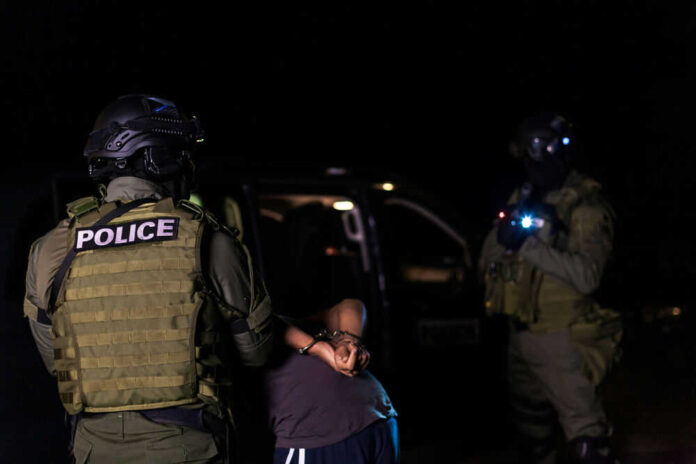
The incident unfolded at a San Fernando Valley residence where what began as a verbal argument reportedly escalated into physical violence. Police found enough evidence at the scene to arrest Anderson on felony charges, though the alleged victim declined medical treatment. The swift police response and Anderson’s subsequent booking demonstrate how seriously California law enforcement treats domestic violence allegations, particularly when they involve public figures.
A Pattern of Post-Career Legal Troubles
Anderson’s arrest represents the latest chapter in a troubling pattern of legal issues that have plagued him since his NFL retirement in 2001 due to a knee injury. His previous encounters with law enforcement include multiple DUI arrests, driving on a suspended license, and various probation violations. While none of these prior incidents involved domestic violence, they paint a picture of an athlete struggling with life after professional sports.
The transition from NFL stardom to civilian life has proven challenging for many former players, but Anderson’s case highlights how personal demons can escalate from traffic violations to serious felony charges. His eight-season career with Atlanta, highlighted by his iconic touchdown celebrations and 1998 Pro Bowl selection, now seems like a distant memory overshadowed by repeated brushes with the law.
California Takes Domestic Violence Seriously
Anderson’s $50,000 bond reflects the gravity of the charges he faces under California’s strict domestic violence statutes. The Golden State has implemented some of the nation’s toughest penalties for spousal abuse, with felony convictions carrying potential sentences of two to four years in state prison. These laws recognize that domestic violence often escalates over time and require aggressive intervention to protect victims.
Legal experts note that California prosecutors rarely dismiss domestic violence cases, even when victims request it, because the state recognizes the complex psychology of abusive relationships. Anderson’s celebrity status won’t shield him from prosecution if the Los Angeles District Attorney decides to file formal charges. The case will likely proceed based on physical evidence, witness statements, and police observations rather than victim cooperation alone.
The Broader Impact on Sports Culture
Anderson’s arrest adds fuel to ongoing discussions about athlete accountability and the NFL’s handling of domestic violence cases. While he retired over two decades ago, his connection to the Atlanta Falcons organization inevitably creates negative publicity for the team. The incident also reinforces concerns about the psychological toll of professional football and the support systems available to retired players.
The timing couldn’t be worse for a league still grappling with its image regarding player conduct. Anderson’s case serves as a stark reminder that the transition from professional athletics to regular life can be fraught with challenges that sometimes manifest in destructive ways. Whether this leads to renewed calls for better post-career support programs remains to be seen, but the pattern of former players facing serious legal troubles demands attention.
Copyright 2025, DailyVantage.com .