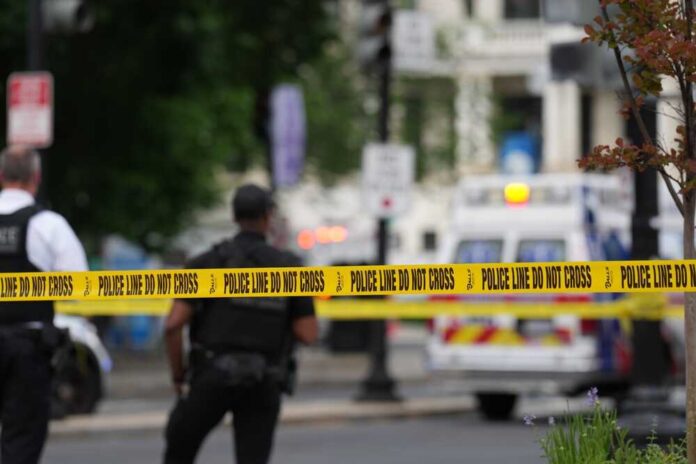
(DailyVantage.com) – Violence pierced the very heart of supposed safety when a man wielding a 14-inch butcher knife slashed an NYPD officer inside her own precinct, forcing a deadly confrontation that has shaken assumptions about law enforcement security in America’s largest city.
Story Snapshot
- A man entered the 73rd Precinct in Brownsville, Brooklyn, and slashed a female NYPD officer in the face with a butcher knife.
- The attack unfolded inside the precinct, a typically secure environment, exposing vulnerabilities in police station security.
- Officers pursued the suspect, unsuccessfully attempted to subdue him with a taser, and ultimately shot and killed him after a chase.
- The incident has sparked internal investigations, renewed debate about officer safety, and questions about handling mental health crises.
How an NYPD Precinct Became the Scene of Chaos
At 5:24 a.m. on September 7, 2025, the 73rd Precinct in Brownsville was quiet, until a man entered the front vestibule, tried to open a locker, and then made his way to a rear police-only entrance. There, he was confronted by a female officer. What followed shattered any illusion of safety: the man produced a 14-inch butcher knife and slashed the officer across her face. This assault, occurring inside the very building meant to protect law enforcement, instantly transformed routine into emergency.
The officer managed to fight off her attacker, but the suspect fled out the back, launching a chase through the precinct and into the surrounding streets. Police officers responded rapidly, deploying a taser in an attempt to subdue the man. The device failed to stop him. In moments, the confrontation escalated further, and officers fired, fatally wounding the suspect. Emergency medical services rushed him to the hospital, but he was pronounced dead soon after arrival.
Why Police Precincts Aren’t as Secure as We Think
Law enforcement precincts are designed as fortresses for public safety, yet this event exposed cracks in their armor. Incidents of violence inside police stations remain rare, but when they occur, they prompt urgent reviews of security protocols. The attack in Brownsville is especially notable for its setting: a neighborhood grappling with elevated crime rates and complex socioeconomic challenges. At the time of the attack, early morning, with potentially reduced staff, the vulnerability was magnified, raising uncomfortable questions about how secure our officers truly are, even in their own headquarters.
Previous attacks on NYC officers have resulted in heightened security measures. Nationally, sporadic violence inside police stations has often involved individuals in crisis. The Brownsville incident stands out not only for the brutality of the assault but for its implications: if security can be breached so easily, what does that mean for other precincts across the country?
Officer Safety, Mental Health, and the Limits of Response
The officer injured in the attack is recovering, but her trauma ripples far beyond personal pain. Her experience highlights the dangers officers face, particularly when dealing with individuals who may be mentally unstable. The suspect’s motivations remain unclear, but official statements describe his behavior as disorderly, possibly driven by untreated mental illness. Law enforcement experts point to the need for secure precinct access and rapid response protocols, while mental health professionals warn about the risks posed by untreated conditions in public spaces.
NYPD leadership, including Chief of Patrol Mark Vasquez, has detailed the incident and the force’s response. Internal investigations are underway, with particular scrutiny on security procedures and use-of-force protocols. Meanwhile, the Brownsville community watches with concern, aware that such violence, especially when fatal, can inflame tensions and deepen mistrust between residents and police.
What Happens Next: Policy, Public Trust, and the National Conversation
Short-term, the precinct has seen heightened security and increased police presence. Long-term, repercussions may be more complex, potentially including policy changes regarding precinct access and officer safety, renewed focus on mental health interventions, and a review of use-of-force standards. The incident also poses economic costs related to medical care, investigation, and possible lawsuits, while social tension simmers over police-community relations and the handling of mentally unstable individuals.
Across the country, law enforcement agencies may take note, reviewing their own security protocols and training officers in de-escalation and crisis intervention. The broader conversation, how to balance officer safety, public access, and humane response to those in crisis, will continue, spurred by events like the one in Brownsville. As credible sources confirm, the facts remain: an officer was slashed, a suspect was shot, and a community must reckon with the aftermath.
Copyright 2025, DailyVantage.com.