President Trump and Iraq’s prime minister said U.S. troops are leaving Iraq on a set timeline, but the plan leaves key gaps that raise new security and accountability questions.
Story Highlights
- Trump and Iraq’s leader announced a U.S. troop withdrawal, citing a reduced mission.
- The United States already cut forces and plans to leave major bases under a phased deal.
- Iraq says federal areas are clearing of U.S. troops, with some presence in Kurdistan.
- Analysts warn Iran-backed militias may test the vacuum as the footprint shrinks.
What Was Announced And What Is Already Underway
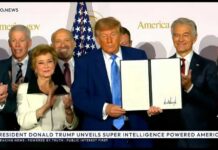
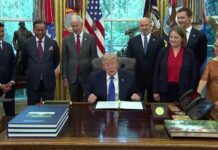
President Trump said the United States does not need to keep troops in Iraq and plans to bring them home. His comments followed meetings with Iraq’s prime minister in Washington. The United States had already reduced its force from about 5,200 to about 3,000 in 2024, according to U.S. Central Command, which oversees forces in the region. That drawdown aligned with a plan to scale back combat roles and focus on training and limited counterterror work.
Marine General Frank McKenzie, then head of U.S. Central Command, outlined the 2024 step-down while visiting Baghdad, underscoring that the mission against the Islamic State group had changed from direct fighting to support and advising. President Trump later reaffirmed his goal to withdraw all U.S. troops from Iraq as quickly as conditions allow, a pledge he tied to shifting priorities and costs of long wars abroad. These statements framed the exit as consistent with long-running promises to end “forever wars.”
How The Phased Exit Is Structured On The Ground
As part of the transition, the United States agreed to vacate several well-known bases, including Al-Asad Airbase and facilities at Baghdad International Airport, and to pass responsibilities to Iraqi forces in phases. Reporting described a two-step process that moves troops out of central and western Iraq first, and then consolidates remaining personnel in safer areas to finish the mission. That structure aims to avoid a sudden vacuum that armed groups could exploit.
The Iraqi government announced in January 2026 that U.S. forces had completed their withdrawal from federal Iraqi territory, with an exception for the semi-autonomous Kurdistan region, where a smaller American presence continues to support counterterror operations and training. That statement marked a public milestone for Baghdad. It also clarified that “complete withdrawal” did not mean zero U.S. personnel anywhere in Iraq’s recognized regions at that point.
Timelines, Exceptions, And The Confusing Pieces
Different reports point to different finish lines. Some accounts describe a federal-territory exit by late 2025, while others project a full coalition departure by the end of 2026. One outlet, citing sources familiar with talks, reported a preliminary agreement for a complete withdrawal of U.S.-led forces by the close of 2026, with phased reductions starting in 2025. The mixed dates highlight why many observers say the exit is real, but not as tidy as a single deadline suggests.
Policy analysts argue that the plan looks more like a redeployment than a hard stop. They note that the United States is leaving large bases but keeping a smaller footprint in Kurdistan to watch for an Islamic State group resurgence and to aid Iraqi partners. They also warn that Iran-backed militias may probe for gains as the U.S. footprint shrinks, challenging claims that departure alone will end militia pressure or Iranian influence in Iraq.
Why Both Parties See Risk—And What The Public Should Watch
For conservatives tired of costly missions, the drawdown looks like overdue relief from spending and risk. For liberals focused on war fatigue and civil priorities at home, it looks like a step toward ending an open-ended commitment. Yet many on both sides share a worry: elite decision makers often sell big shifts with sunny claims, while the hard tradeoffs stay hidden. That fear grows when officials offer limited documents or few on-record details to test the plan.
Trump and Iraqi Prime Minister Announce U.S. Troop Withdrawal, Expand Economic Partnership and Pledge New Era for Iraq https://t.co/10FrHXflDL
— Simon Ateba (@simonateba) July 14, 2026
Several claims need proof. The idea that withdrawal will end Iranian “bullying” lacks primary-source backing. No declassified intelligence, formal agreement, or named Iraqi testimony confirms a drop in militia leverage tied to the drawdown. Meanwhile, attacks by groups tied to Iran persisted even as planning moved forward, suggesting the threat was not gone during the transition. Readers should watch for the full text of any U.S.–Iraq security annexes and for data on militia activity over time.
Bottom Line For Americans
The United States and Iraq are executing a real, phased troop exit. Forces are leaving major bases, and Baghdad says federal areas are now clear of U.S. troops. A smaller presence remains in Kurdistan for counterterror work. The timelines vary by source, and the strategy carries risks that deserve sunlight. If leaders want trust, they should release the full agreements, show security metrics, and explain costs. Anything less looks like politics first, accountability second.
Sources:
youtube.com, apnews.com, responsiblestatecraft.org, timesofisrael.com, en.wikipedia.org, cnn.com, bbc.com
© dailyvantage.com 2026. All rights reserved.