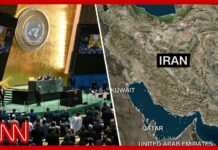
President Trump has hit the brakes on new strikes against Iran, saying he will cancel a major attack if Iran quickly accepts deal terms to reopen the Strait of Hormuz and end its nuclear threat.
Story Snapshot
- President Trump says he agreed to cancel a planned U.S. attack on Iran if a deal is reached quickly that fully reopens the Strait of Hormuz and ends Iran’s nuclear threat.
- U.S. strikes, which had run for about two weeks, have been paused as officials say they want to give diplomacy more time.
- Iranian officials say they will halt their own attacks as long as the United States keeps its bombing on hold, signaling a fragile, mutual pause.
- The “deal” is still only an outline; there is no public signed agreement, and Trump warns strikes can resume if talks fail.
Trump Ties Halted Attack to Fast-Tracked Deal Terms
President Trump announced on social media that he had “agreed…to cancel the attack” against Iran if the two sides can “rapidly make a DEAL.” He said Iran and other Middle Eastern countries asked him to “hold off” so they could try to finalize what he called the “perimeters of a deal.” Those parameters include the “Immediate, Complete, and Total OPENING OF THE HORMUZ STRAIT, and an end to Iran’s nuclear threat,” putting global shipping and weapons at the center of his demands.
Trump’s words matter because they come after days of heavy fighting and after earlier threats to launch a “very major” strike on Iranian energy facilities. He has repeatedly used large, dramatic language, talking about wiping out Iran’s ability to wage war and warning that “a whole civilization will die tonight” if Tehran refuses his terms. For many Americans, this swing from threats of annihilation to talk of a paused attack based on a possible deal adds to a sense that foreign policy decisions are made in sudden, confusing bursts rather than through steady, transparent planning.
Two-Week Bombing Pause Becomes a Diplomatic Test
According to Pentagon reporting and several news outlets, the United States paused strikes after roughly 13 straight nights of bombing Iranian targets. No new U.S. attacks were reported over the weekend after Trump ordered the halt, and officials described the pause as meant to “allow more time for diplomacy.” The U.S. ambassador to the United Nations, Mike Waltz, said Trump stopped the bombing so negotiators could work on issues around the Strait of Hormuz and Iran’s nuclear program, not because the military had lost the ability to strike.
Iran appears to have answered with its own limited pause. A senior Iranian official told Reuters that Tehran would halt its retaliatory attacks as long as the United States keeps its bombing campaign on hold. This kind of informal, mutual pause is short of a formal ceasefire but still matters: it lowers the risk of immediate escalation while talks continue. At the same time, both sides make clear the pause is conditional. If negotiations stall, each claims the right to restart attacks, which keeps ordinary Iranians and U.S. forces living under constant uncertainty.
Deal Framework: What’s on the Table — and What’s Missing
Reporting from Bloomberg, Fox News, and BBC shows active negotiations built around two big ideas: reopening the Strait of Hormuz and limiting Iran’s nuclear program. The Strait is one of the world’s key oil shipping lanes, and its closure has driven up energy prices and strained already tight budgets for American families and businesses. Trump’s demand for “Immediate, Complete, and Total” reopening fits long-standing worries on both the right and the left that the global economy can be held hostage by faraway conflicts and by decisions of unelected elites.
🚀 ⚡What Just Happened
🚨 BREAKING: Trump calls off US strikes on Iran — but only if a deal is reached 'rapidly' ⚡
Is this the path to peace or just a pause? #Trump #IranDeal
What do you think? 👇
🛑 Trump halts fresh Iran attacks hoping for a quick deal 🤯
Diplomacy or…
— 1000x (@1000xCall) August 2, 2026
The nuclear part of the talks echoes an earlier negotiation track. Past reporting on the 2025–2026 U.S.–Iran talks described draft terms where Iran would lower uranium enrichment, restore international inspections, and agree to permanent limits in exchange for access to frozen funds and oil exports. That kind of deal would touch many hot-button issues at once: fears about war and terrorism, anger over high gas prices, and distrust of secret global arrangements made without clear public debate. Yet right now, the “deal” Trump cites is only a framework. There is no public signed text, and Trump himself has called it “somewhat conceptual.”
Pause Versus Peace: Why the Language Matters for Voters
Across this whole crisis, Trump and many media outlets have used shifting words to describe the same basic action. On some days he says strikes are “canceled,” on others they are “paused,” “postponed,” or part of a “two-week ceasefire.” News headlines echo this mix, talking about a “halt,” “double-sided ceasefire,” or “peace deal is imminent,” even while reporters note there is no verified final agreement. For citizens who already feel Washington is run by a distant “deep state,” this language fog can look like more spin from powerful insiders.
That fog matters because it shapes public expectations. Many Americans hear “ceasefire” and think the war is ending, when in fact officials stress that U.S. forces are “locked and loaded” if talks break down. The pattern fits a familiar story: announcements reach for big, hopeful words long before solid proof appears. Readers on both the right and the left see leaders claim credit for “progress” while everyday people still face higher prices, market fear, and the risk that another far-off crisis will spill over into their own lives.
Shared Concerns: Power, Transparency, and the Cost of War
Conservatives angry about past globalist policies watch this Iran episode and worry that unelected diplomats and military planners are again making massive decisions without clear accountability. They see a White House that can start and stop bombing based on private talks with foreign leaders, while ordinary Americans only learn the basics through brief posts and cable clips. Liberals upset about endless wars and inequality see the same pattern: huge sums spent on missiles and deployments, yet little investment in fixing problems at home.
What ties these views together is a shared feeling that the federal government answers more to elite interests than to citizens. The pause in strikes shows Washington can move fast when the stakes are oil routes and nuclear plans. It rarely moves as fast on issues like health costs, wages, or border chaos. As the Iran talks continue, this story is not only about distant battlefields. It is also about whether Americans can trust that life-or-death decisions are made with honesty, clear limits, and respect for the people who pay the price when wars drag on.
Sources:
military.com, bbc.com, usatoday.com, politico.com, youtube.com, reuters.com, theguardian.com, wsj.com, bbc.co.uk, timesofindia.indiatimes.com, cnn.com, bloomberg.com, npr.org, wbaltv.com
© dailyvantage.com 2026. All rights reserved.