Federal immigration agents killed a man during a mistaken traffic stop in Houston, and now both sides are battling over whether this was self-defense or another deadly sign that the system protects officers more than the people they police.
Story Snapshot
- ICE says Lorenzo Salgado Araujo tried to ram agents with his van and was shot in self-defense.
- The Harris County medical examiner ruled his death a homicide, and no agents had body cameras.
- Surveillance video and witness accounts raise questions about the official story and show a confusing stop.
- Federal officials shut local Texas authorities out of the probe, fueling fears of a closed, insider investigation.
How A Mistaken Traffic Stop Turned Deadly
On July 7, 2026, Immigration and Customs Enforcement (ICE) agents pulled over a white van in Houston that they later admitted was not the vehicle they were actually looking for. The man driving, 52‑year‑old Mexican national Lorenzo Salgado Araujo, ended up fatally shot during the stop. ICE said Araujo tried to flee, rammed an ICE vehicle, ignored commands, and used his van as a weapon to run over an officer, forcing the agent to fire in self-defense. Houston firefighters found Araujo with a gunshot wound to his abdomen.
The Department of Homeland Security (DHS) said the stop happened because Araujo’s van looked like the suspect’s vehicle they were tracking. Federal Bureau of Investigation (FBI) officials in Houston opened a case into a possible assault on a federal officer, treating ICE’s claim that the van was used as a weapon as a serious criminal allegation. DHS’s Office of Inspector General also launched an internal review of the shooting. Together, these steps show the federal government is framing the event around whether Araujo attacked officers, not whether agents made mistakes that turned a bad stop into a deadly one.
Family, Local Officials, And Video Challenge The Official Story
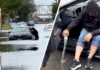
Araujo’s family and local leaders describe something very different from ICE’s account. His son says agents in unmarked cars boxed in the van and shot his father inside the vehicle, then he heard his dad crying for help while bleeding out. New surveillance footage aired by local media shows sport utility vehicles cutting off the van but does not clearly capture Araujo ramming an ICE truck or driving straight at an officer. The Harris County medical examiner officially ruled the death a homicide, saying Araujo died from a gunshot wound during an ICE operation.
The lack of clear video makes these clashing stories even harder to sort out. DHS and news reports confirm agents in Houston were not equipped with body cameras, so there is no direct officer‑worn footage of the moment the shot was fired. ICE has also not publicly named the agent who pulled the trigger. Civil rights groups say detained passengers from the van are being pushed to sign voluntary departure papers before they can give full testimony. These gaps feed public worries that the people with the most power in this case control most of the evidence and are in no rush to share it.
Federal Control Of The Investigation Fuels Left And Right Anger
The fight over who investigates has become its own major issue. The Harris County district attorney says federal agencies have sidelined local Texas officials from the probe into the shooting. That means county prosecutors and police, who answer directly to local voters, do not have full access to evidence or interviews. Four Democratic members of Congress from Houston have demanded an independent investigation and called for all video, warrant details, and officer records to be preserved. Their letter reflects rising concern that DHS will investigate itself and then declare the shooting justified.
New: According to U.S. Rep. Sylvia Garcia, ICE Director David Venturella informed her in a call Thursday afternoon that ICE agents didn’t have any body-worn cameras or dashboard cameras during the fatal shooting of Lorenzo Salgado Araujo. https://t.co/VgeHKZ4XfR
— Texas Tribune (@TexasTribune) July 10, 2026
At the same time, Republican Texas Governor Greg Abbott has warned he may withhold more than $100 million in state funds if Houston slows its cooperation with ICE. That puts city and county leaders in a vise: push too hard for answers and risk losing money, or stay quiet and anger residents who already think government protects itself first. For conservatives worried about “deep state” overreach and liberals worried about abuse of immigrants, federal control of the case and financial pressure from Austin both look like signs that regular people have little say when a federal officer kills someone.
A Pattern Of Vehicle Shootings And No Real Accountability
This Houston case does not stand alone. Investigations by reporters and advocates show a pattern where ICE or Border Patrol agents say drivers “weaponized” their vehicles or tried to run officers over, then use those claims to justify deadly force. A recent review by The Trace found 59 shootings by ICE officers from 2015 to 2021, with 23 people killed and more than a dozen injured, and very few lawsuits or criminal charges. Federal rules say deadly force is allowed only when there is an imminent danger of death or serious injury. But the same agencies that write those rules also decide whether their own officers followed them.
In Minneapolis this January, for example, the Department of Homeland Security said Renee Good “weaponized her vehicle” and tried to run over an agent before he shot her, even though later video raised doubts about whether she was driving toward him at all. Wired reported that, despite repeated disputes between official stories and video evidence, no ICE agent has ever faced criminal indictment for a shooting. The Houston killing of Lorenzo Salgado Araujo now sits inside that history: a confusing stop, a driver shot, a claim of self-defense, and an investigation controlled almost entirely by the same federal system whose behavior is at the center of public anger.
Sources:
mediaite.com, texastribune.org, washingtonpost.com, x.com, facebook.com, cbsnews.com, instagram.com, click2houston.com, algreen.house.gov, youtube.com, khou.com, nbcnews.com, latimes.com
© dailyvantage.com 2026. All rights reserved.