(DailyVantage.com) – When federal dysfunction leaves Americans stranded in hours-long airport lines, the real story isn’t “ICE stepping in”—it’s how Washington keeps pushing basic government functions to the breaking point.
Quick Take
- Hartsfield-Jackson Atlanta International Airport saw TSA security waits peak around three hours during a partial federal shutdown tied to DHS funding disputes.
- Atlanta airport leadership reported a 34% TSA call-out rate as agents missed paychecks, while nationwide attrition included hundreds quitting.
- President Trump directed funded ICE personnel to assist TSA with line management and support tasks, not immigration enforcement, according to Atlanta’s mayor.
- Early on-site reporting showed ICE agents present and lines still long, with no firm public data proving “dramatic” wait-time reductions.
Atlanta’s Three-Hour TSA Lines Exposed a Shutdown Pressure Point
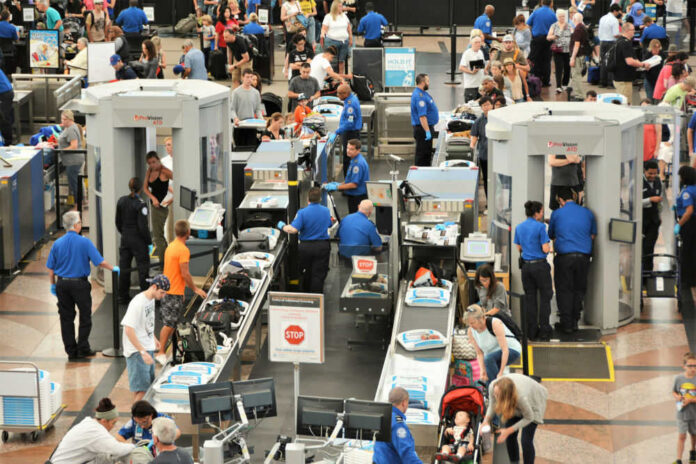
Hartsfield-Jackson Atlanta International Airport, the world’s busiest hub, became a national symbol of shutdown fallout when security waits spiked to roughly three hours. Airport leadership attributed the crunch to staffing problems at TSA, including a reported 34% call-out rate as missed paychecks piled up. Airlines adjusted operations and the airport urged travelers to arrive hours early, underscoring how quickly a federal standoff can hit working families.
President Trump responded by announcing that ICE agents would be deployed to help manage lines and support screening operations where TSA staffing was strained. DHS officials said the department would use “every tool” available to keep travelers moving. The key operational detail is that ICE personnel were funded and available even as other parts of the system were disrupted—an improvised fix that highlights how fragile the travel pipeline becomes when payroll and staffing stability collapse.
What ICE Actually Did at ATL—And What Officials Said They Wouldn’t Do
On Monday morning, ICE agents were visible at ATL’s south terminal and main checkpoint areas, walking lines and observing crowd flow. Local officials emphasized limits. Atlanta Mayor Andre Dickens said the ICE role was assistance rather than immigration enforcement, a distinction meant to calm concerns that an airport security breakdown could morph into an ad hoc enforcement operation. That boundary matters for public trust, especially when anxious crowds and tight schedules raise tensions.
Reports from the checkpoint were mixed. Some travelers said lines appeared to be moving faster, while others remained skeptical about whether additional personnel were making a meaningful difference. The most concrete, verifiable facts available in the reporting focus on presence and process—ICE agents in vests, line monitoring, and coordination—rather than measurable results. Without published before-and-after throughput numbers, claims of “dramatic” reductions remain difficult to confirm from the available research.
The Bigger Issue for Conservatives: Government Overreach vs. Government Breakdown
Conservatives often warn about federal overreach—rules, mandates, and bureaucracies that expand far beyond their core mission. This episode points to the other side of that coin: government breakdown that forces emergency improvisation. Reassigning personnel across agencies can be practical in a crisis, but it can also normalize a “just shuffle bodies around” approach instead of fixing root causes like funding stability, workforce retention, and clear lines of authority. Limited government still has to function.
Why This Lands Differently in 2026, With War Fatigue and “America First” Tensions
In today’s 2026 political climate—Trump in a second term and the U.S. at war with Iran—many MAGA voters are split between backing decisive action and rejecting open-ended entanglements. That frustration bleeds into domestic flashpoints like airports: Americans see money and attention flowing to distant conflicts while basic systems at home buckle under predictable stress. The research here doesn’t quantify new spending tradeoffs, but it does show how quickly “essential” services can falter.
Thanks to ICE, Wait Times in Atlanta's Airport Security Lines Have Dropped Dramatically
https://t.co/snu5d4TRO6— Townhall Updates (@TownhallUpdates) March 24, 2026
The immediate takeaway is not a clean victory lap; it’s a warning about incentives. Shutdown politics create maximum pain for ordinary travelers and low-level workers first, then leaders scramble for headline solutions. ICE support may help manage lines, but the public still deserves transparent reporting: how many agents were deployed, which airports received help, and what measurable change occurred in wait times. Without that, Americans are asked to trust narratives instead of results.
Sources:
Atlanta airport wait time hits 3 hours as Trump promises ICE assistance
ICE agents arrive Atlanta airport Monday morning
ICE agents airports TSA wait times begins Monday
Airport security lines are long. Here’s what to know if you’re flying
Copyright 2026, DailyVantage.com