(DailyVantage.com) – A viral campus confrontation is resurfacing a hard truth that activists often blur: pregnancy does not, by itself, stop deportation in the United States.
Quick Take
- A short clip of Vivek Ramaswamy telling a student that “pregnancy doesn’t change deportation laws” is spreading again amid tougher 2026 enforcement debates.
- Legal guidance and attorney explanations consistently state there is no automatic “pregnancy exemption” from removal, even when a child is or could become a U.S. citizen.
- Federal policy has swung across administrations on whether pregnant migrants should be detained, but deportability itself has not changed.
- New reporting cites hundreds of deportations involving pregnant, postpartum, or nursing women in 2025–2026, alongside disputes over detention conditions and medical outcomes.
The Clip That Rekindled a Larger Immigration Argument
A short-form video showing Vivek Ramaswamy responding to a liberal student’s immigration question has gone viral again because it reduces a complicated debate to a blunt legal point: pregnancy does not change deportation law. That exchange is landing in 2026 because immigration enforcement is once again a front-page issue, and many voters believe the system has become a tangle of emotions, loopholes, and selective rulemaking rather than consistent standards.
Ramaswamy’s claim aligns with mainstream legal explanations: being pregnant does not automatically prevent removal, and having children does not create an immunity shield. Attorneys who field these questions routinely warn that “anchor baby” assumptions are myths in practice, because immigration courts and DHS can still remove a parent who lacks legal status. Where the debate turns political is not on whether deportation is legally possible, but on how the government exercises discretion.
What the Law Says Versus What Policy Can Change
Across multiple administrations, the baseline has stayed consistent: deportability is determined by immigration status and legal process, not by pregnancy. What can shift is detention and enforcement posture—whether ICE holds someone during proceedings or uses alternatives like release, monitoring, or stays. That distinction matters because it separates a legal question (“Can ICE remove someone?”) from a policy question (“Should ICE detain this person right now?”), and the two get conflated in public debate.
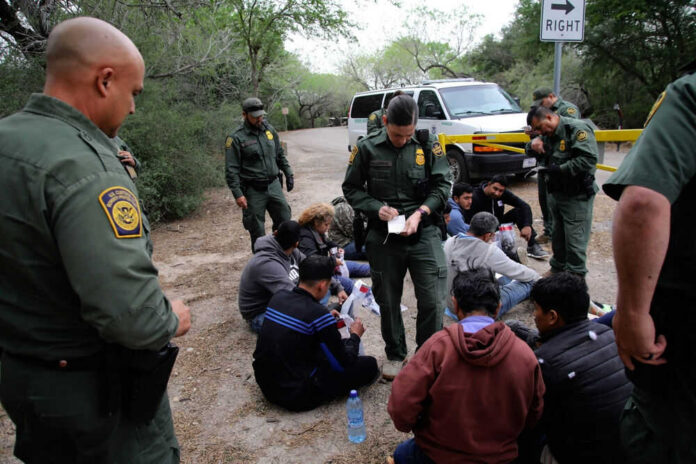
Recent reporting points to an enforcement environment in which pregnancy is not treated as a categorical shield from detention or deportation. Human Rights Watch reported that, from January 2025 through mid-February 2026, ICE deported 363 pregnant, postpartum, or nursing women and had 86 pregnant detainees as of Feb. 16, 2026, including some in later stages of pregnancy. The same report highlighted miscarriages recorded in custody and raised concerns about whether agency practice matches stated standards.
How Washington’s Pendulum Swings Create Confusion for the Public
Americans often hear sweeping claims—either that ICE “never” detains pregnant women or that pregnancy is being ignored entirely—but the research shows shifting rules that are mostly about detention presumptions, not a new legal right to stay. Summaries of policy changes describe Obama-era guidance that generally avoided detaining pregnant women except in extraordinary circumstances, followed by a Trump-era rescission that moved to case-by-case determinations, and then a Biden-era reversal restoring broader non-detention guidance.
That back-and-forth fuels distrust on both sides. Conservatives see selective enforcement as an invitation to abuse the system and as proof that Washington responds more to activist pressure than to the rule of law. Liberals see the same swings as evidence that basic humanitarian considerations depend on who holds power, not on stable standards. Either way, constant reversals create an immigration regime that feels arbitrary, and arbitrariness is where “deep state” suspicions thrive.
Discretion, Stays, and the Real-World Stakes for Families
Attorney guidance emphasizes that, while pregnancy is not a defense to deportation, individuals can sometimes seek discretionary relief, including stays of removal, especially when medical complications exist. That reality is less satisfying than a bright-line rule, but it reflects how the system is structured: many outcomes depend on individual case posture, documentation, and the discretion of officials. The problem is that discretion can look like favoritism when it is inconsistent or poorly explained.
Human Rights Watch’s findings—paired with DHS responses cited in that reporting—also underscore the practical stakes of detention decisions. If an agency says it respects “dignity” while enforcing the law, voters expect basic accountability when serious medical issues are reported in custody. At the same time, the absence of a pregnancy-based legal exemption means the policy debate should be framed honestly: Americans are deciding how enforcement should be carried out, not whether pregnancy rewrites immigration law.
For 2026, the broader takeaway is straightforward. If the federal government wants public legitimacy—among conservatives demanding enforcement and among liberals worried about humane treatment—it has to separate law from discretion, publish clear detention standards, and apply them consistently. Otherwise, viral clips will keep doing what Washington won’t: compress a messy system into a soundbite, while public trust in federal institutions continues to erode.
Sources:
ICE Issues Policy Related to Pregnant Immigrant Women
Can I still get deported even if I’m pregnant?
US Ramps Up Deportation of Pregnant People
Trump Administration Ends Automatic Release From Immigration Detention For Pregnant Women
ICE Policy on the Detention of Pregnant Women
Copyright 2026, DailyVantage.com