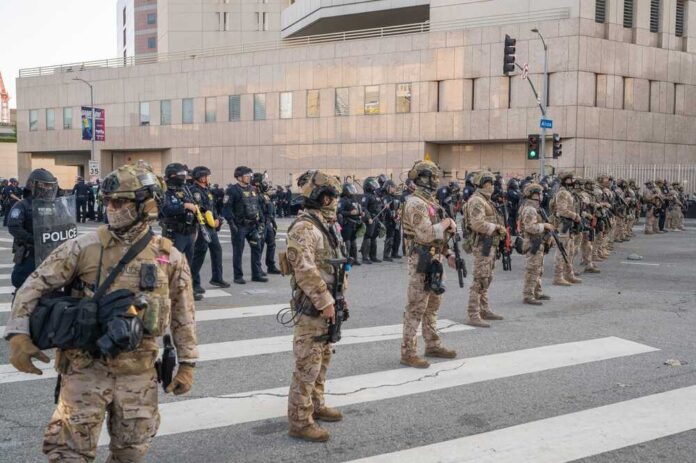
(DailyVantage.com) – President Trump just bypassed Chicago’s defiant leadership to deploy National Guard troops to Memphis instead, exposing a brewing constitutional crisis over federal intervention in local law enforcement.
Story Highlights
- Trump announces National Guard deployment to Memphis after shelving Chicago plans due to “hostile” local leadership resistance
- Memphis mayor confirms deployment but clarifies he never requested federal military intervention in his city
- Deployment occurs despite Memphis reporting 44% drop in crime incidents and 30% decline in homicides this year
- Move echoes 1968 National Guard deployment in Memphis following Martin Luther King Jr.’s assassination
- Tennessee’s Republican governor coordinates with Trump while local Democratic officials question the necessity
Federal Authority Meets Local Resistance
Trump’s September 12th announcement during a Fox & Friends interview revealed his strategic pivot from Chicago to Memphis after encountering what he termed “hostile” leadership in the Windy City. The decision demonstrates how local political cooperation now determines federal crime intervention strategies. Memphis Mayor Paul Young found himself caught between accepting federal help and maintaining he never requested military assistance for his city.
Tennessee Governor Bill Lee’s willingness to coordinate with federal authorities contrasted sharply with Chicago’s resistance, highlighting how state-level relationships influence Trump’s deployment decisions. The president specifically cited his previous Washington D.C. deployment as a model for Memphis, suggesting a template for future interventions in cities with cooperative state leadership.
Crime Statistics Challenge Intervention Rationale
Memphis crime data presents a paradox for federal intervention supporters. The city reported a 44% decrease in overall crime incidents and nearly 30% reduction in homicides compared to the previous year. These improvements followed $150 million in intervention grants and expanded state trooper presence, suggesting local solutions were already producing results without military involvement.
State Senator London Lamar captured local sentiment perfectly: “Memphis is not a war zone, it’s a city making progress.” This statistical reality complicates Trump’s narrative of a “deeply troubled” city requiring federal rescue. The deployment raises questions about whether political symbolism or genuine public safety needs drive these interventions.
Historical Echoes and Constitutional Concerns
The Memphis deployment carries profound historical weight, marking the first National Guard presence since 1968 following Martin Luther King Jr.’s assassination. State Senator Raumesh Akbari noted this parallel, emphasizing how rare such federal interventions remain in American cities. The precedent raises uncomfortable questions about when military force becomes appropriate for civilian law enforcement.
Constitutional scholars and civil liberties advocates worry about normalizing military deployments in domestic settings. The Posse Comitatus Act traditionally limits military involvement in civilian law enforcement, making these National Guard deployments a carefully watched legal gray area. Local communities, particularly minority populations, express concern about increased militarization affecting community-police relations.
Political Theater or Public Safety Necessity
Critics argue Trump’s crime crackdown represents political theater rather than evidence-based policy. The selective targeting of Democratic-led cities, combined with Memphis’s improving crime statistics, suggests political calculations drive deployment decisions more than emergency conditions. Shelby County officials openly questioned the timing and necessity of federal intervention.
However, supporters view these deployments as necessary federal leadership where local authorities fail to maintain order. They point to Trump’s stated commitment to public safety and his willingness to use available federal resources to protect American communities. The debate reflects deeper philosophical divisions about federal versus local authority in addressing urban challenges.
Copyright 2025, DailyVantage.com.