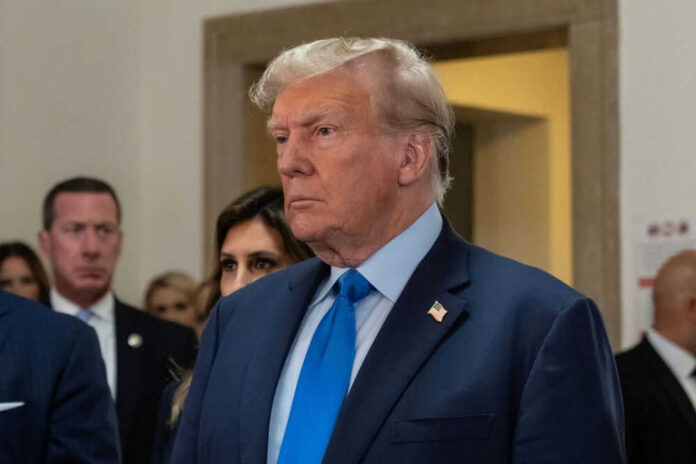
President Trump vowed to make it “legally impossible” for a future president to reopen the border, unveiling a proposed No Invasion of Our Country Act at the GOP’s Dallas convention.
Story Highlights
- Trump introduced a “No Invasion of Our Country Act” aimed at locking in strict border rules.
- The plan targets future presidents, limiting reversals of current immigration restrictions.
- The proposal arrives as Republicans showcase border enforcement as a midterm priority.
- Legal experts say Congress holds core immigration power, setting up a likely court fight.
Trump’s Pledge To Lock In Border Policy
President Trump told Republican delegates in Dallas that he will push a No Invasion of Our Country Act to prevent any future president from “opening the border again.” He cast the plan as a legal shield to preserve current immigration limits set during his term. Reports from the event quoted Trump’s exact phrase and the bill’s title. The timing aligned with a midterm push that centers border enforcement as a top message for the party.
White House actions since 2025 underscored the same theme. The administration issued a proclamation asserting that entry by migrants involved in the southern border “invasion” is harmful to national interests and directed stronger criminal prosecution of unlawful entry and presence. Those steps framed migration as a national security issue and set a base for further legal moves that a statute like Trump’s proposal could seek to entrench.
How Congress And Presidents Share Power On Immigration
United States law places primary immigration power with Congress, which writes the rules for entry and enforcement. Presidents then carry out those laws through the Department of Homeland Security and other agencies. Over time, Congress has granted wide enforcement discretion to the executive branch. That mix often sparks conflict when a president tries to cement a policy that a later president could undo using the same discretion.
Analysts also point to laws that let presidents restrict entry of certain foreign nationals and close specific ports of entry for safety. But experts say those powers do not amount to a full border “closure.” That legal line matters because the Dallas promise aims to block a future White House from expanding entry or loosening controls, which a later administration may still attempt under existing delegated authority.
Why Supporters And Critics See High Stakes
Supporters argue that sudden shifts in border policy create chaos, attract more illegal crossings, and burden communities. They want a statute that prevents a future rollback of arrests, removals, or entry limits. For many on the right, the pledge answers years of anger over what they view as weak enforcement and policies that reward lawbreaking and depress wages for working Americans. The Dallas stage signaled the party intends to campaign hard on that view.
Critics counter that Congress controls immigration design and spending, and that attempts to “future-proof” policy can clash with the Constitution. They warn that aggressive border tactics can stretch executive power and weaken due process for migrants. Some legal experts say prior attempts to bypass Congress on border funding or sweeping entry limits invited court challenges. They expect any new lock-in statute to face immediate suits over separation of powers.
What “Legally Impossible” Could Mean In Practice
Any act that binds future presidents must rest on clear statutory commands and durable funding rules. Congress can set strict enforcement mandates, limit waivers, and narrow discretion. But a later Congress can amend or repeal those limits. Courts also review laws that curtail executive discretion too tightly or conflict with existing frameworks. That is why past fights over emergencies, entry bans, and funding shifts often ended up before judges rather than ending in speeches.
"He pushed a 'No Invasion of Our Country Act' so no future president can reopen the border with a pen. Texas heard
it first." https://t.co/delOUbKWjD— Gene Van Shaar (@GeneVanShaar) September 10, 2026
The proposal’s details were not publicly available beyond the title and the stated goal. That leaves open core questions: which statutes would it amend, how would it define “opening the border,” and what penalties or funding rules would enforce it. Without text, analysts cannot test how it fits with long-standing immigration laws or delegated powers. Expect a sprint from activists and state attorneys general to support or sue the measure once language appears.
Why This Matters Beyond Partisan Lines
Many Americans, right and left, feel Washington lurches from one extreme to another while border communities absorb the impact. They worry that leaders play to cameras instead of fixing a broken system. A stable, clear policy could reduce costly swings in enforcement and message. But hard locks can also reduce flexibility when conditions change. The deeper fight is about trust: who sets the line, and who keeps faith with the public when power changes hands.
Sources:
insiderpaper.com, nypost.com, townhall.com, congress.gov, federalregister.gov, abcnews.com, dallasnews.com, whitehouse.gov, cbsnews.com
© dailyvantage.com 2026. All rights reserved.