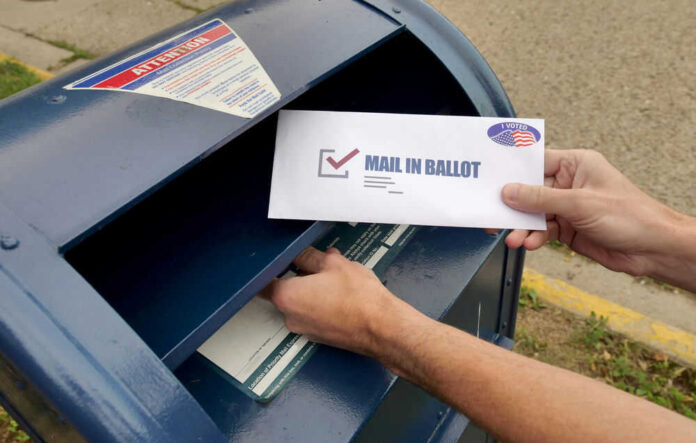
(DailyVantage.com) – Donald Trump’s vow to sign an executive order eliminating mail-in ballots and voting machines for the 2026 midterms could ignite the fiercest battle over federal and state election control in American history.
Story Snapshot
- Trump declares intent to ban mail-in ballots and voting machines for 2026 elections, citing fraud and inaccuracy.
- The move asserts unprecedented federal authority over traditionally state-run election procedures.
- Immediate backlash expected from state officials, voting rights groups, and legal scholars over constitutional grounds.
- Experts warn of deepening partisan divides and potential voter confusion ahead of the midterms.
Trump’s Executive Order Gambit: A New Front in Election Wars
August 18, 2025, shattered the usual lull of a late summer news cycle when President Trump announced on his social media platform a plan to “bring HONESTY” to the 2026 midterms by signing an executive order targeting both mail-in ballots and voting machines. The declaration, made more than a year before the elections, signals not just an administrative tweak, but an audacious attempt to reshape the very machinery of American democracy. Trump’s framing, that states are mere “agents” of the federal government when it comes to elections, marks a drastic pivot from two centuries of decentralized, state-run voting systems.
Immediate reactions ranged from fervent support among Trump loyalists to urgent warnings from election officials and legal experts who see the move as a constitutional overreach. The lack of a released executive order text leaves both supporters and critics speculating, but the president’s intention is clear: to return the nation to paper ballots and eliminate voting machines and mail-in options he claims are “sources of fraud and inaccuracy.”
Historical Fault Lines: The Battle Over Ballots
U.S. elections have always been administered by the states, with methods and procedures varying widely. The COVID-19 pandemic in 2020 turbocharged mail-in voting, drawing sharp partisan lines over its security. Trump and his allies have asserted, repeatedly and without substantive evidence, that mail-in ballots and electronic tabulators invite fraud. These claims have been debunked by courts and bipartisan election authorities, but the narrative persists, becoming a rallying cry for segments of the GOP base.
Since 2020, Republican-led states have moved to restrict mail-in voting and closely scrutinize voting technology. Trump’s renewed effort as president in 2025 is less a policy tweak and more a crusade, one pitting federal muscle against the constitutional autonomy of the states. The legal stakes are high: the Constitution explicitly delegates election administration to the states, and any federal order to override that principle will face immediate and ferocious court challenges.
Stakeholders and Power Struggles: Who Decides How America Votes?
The most powerful players in this drama are not just Trump and his advisors, but state election officials, secretaries of state, governors, who have both the legal authority and practical know-how to run elections. Most are preparing for a long, bruising fight to maintain their prerogatives. Voting rights groups and the election technology industry, facing the existential threat of a federal machine ban, are already assembling legal war chests and lobbying Congress.
Congressional leaders and the federal courts will be forced to weigh in. If Trump moves forward, the courts will have to decide whether the president can command the states to change how they run their elections. The judiciary’s answer could permanently alter the balance of power between Washington and the states, with ramifications for every election to come.
Foreseeable Consequences: Chaos, Court Battles, and a Divided Electorate
In the short term, legal challenges will likely stall or block any executive order, but the spectacle alone will stoke anxiety and division. Voters who rely on mail-in ballots, seniors, the disabled, military personnel abroad, may face confusion and uncertainty. The technology sector is bracing for a potential collapse in the election hardware market. Meanwhile, the debate will fuel already raging partisan fires, with each side accusing the other of sabotaging democracy.
Experts across the spectrum, election law scholars, bipartisan commissions, and national security analysts, agree on two key points: there is no credible evidence of widespread fraud in mail-in or machine voting, and the Constitution places primary authority over elections in the states’ hands. Trump’s assertion of federal authority over elections is unprecedented, and most expect the courts to intervene swiftly. Still, the uncertainty itself could do lasting damage, undermining public confidence in the system and deepening the sense of crisis that now defines American political life.
Copyright 2025, DailyVantage.com.