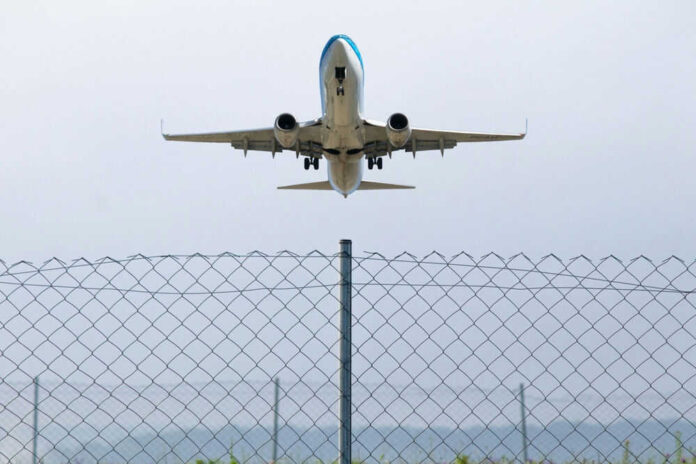
(DailyVantage.com) – When gangs with drones and rifles force a global superpower to ground its planes, the world must ask, who really controls Haiti’s skies?
Story Snapshot
- The FAA has extended its ban on all U.S. commercial flights to Port-au-Prince until March 2026, citing direct threats from heavily armed gangs.
- More than 90% of Haiti’s capital is now under gang control, with gangs wielding small arms and drones capable of targeting aircraft during low-altitude flight.
- Direct attacks on commercial planes, including a 2024 shooting at a Spirit Airlines flight, have made aviation safety impossible to guarantee.
- The ban’s extension highlights a new chapter in Haiti’s crisis: non-state actors can now paralyze a country’s international access by force.
Gangs Dictate the Skies: The New Power in Port-au-Prince
Federal authorities have effectively surrendered Haitian airspace to criminal gangs. After a series of brazen attacks, including a November 2024 incident where gunfire struck a Spirit Airlines jet as it landed, the FAA announced a new extension of its total ban on U.S. commercial flights to Port-au-Prince. The order, now lasting until March 7, 2026, is not just a bureaucratic measure. It represents an extraordinary acknowledgment: gangs, not the government, are the de facto regulators of the skies above Haiti’s capital.
With 90% of Port-au-Prince under gang control, security has collapsed to the point that even the most basic travel is a gamble. U.S. officials and the FAA now cite not only the threat of small arms fire but also gangs’ use of drones, which can strike at planes during the most vulnerable phases of flight. This danger forced the closure of Haiti’s main airport for nearly three months in early 2025, a closure that only ended in May, and even then, with no guarantee of safety for returning flights or passengers.
America’s Response: Redefining Terrorism and Shifting Policy
The U.S. government’s response has moved beyond mere travel advisories. In May 2025, it designated the Viv Ansanm gang coalition as a foreign terrorist organization. This rare step underscores the scale of the threat; never before have criminal groups so thoroughly undermined a national government’s authority and posed such a direct risk to international civil aviation. For American citizens, the message is clear: don’t expect help landing in Haiti anytime soon. The ban remains, and the calculus is not just about risk, it’s about the impossibility of guaranteeing any safe passage as long as gangs hold sway.
The FAA’s statements leave no room for ambiguity. Haitian gangs now possess not only the weapons but also the tactical sophistication, drones, coordinated attacks, and territorial dominance, to keep an entire nation isolated. The U.S. ban is, in effect, a recognition of these hard facts. Commercial airlines, including Spirit and JetBlue, have suspended all service, and humanitarian flights face logistical nightmares. The Haitian government, largely powerless, watches as its sovereignty erodes one flight ban at a time.
Collateral Damage: Humanitarian Fallout, Economic Decline, and International Lessons
Haiti’s isolation isn’t just a diplomatic inconvenience. The immediate fallout is severe: families divided, commerce choked off, and humanitarian aid severely restricted. Haitian citizens are cut off from relatives and vital supplies; the U.S. diaspora cannot visit or send support. Commercial airlines, once a vital link, now lose millions, and the port city’s battered economy spirals further downward. Aid organizations, already struggling with gang checkpoints on the ground, face new hurdles in delivering food, medicine, and hope.
The long-term prognosis is grim. As international flights remain grounded, Haiti’s government loses legitimacy and vital revenue. Investors flee, tourists vanish, and even the most basic government services become harder to deliver. Experts see this as a cautionary tale for global security: when non-state actors can force a global superpower to cede the skies, the precedent is chilling. Aviation officials, security analysts, and policymakers are now forced to reconsider assumptions about where, and how, aircraft can safely operate in unstable regions.
Copyright 2025, DailyVantage.com.