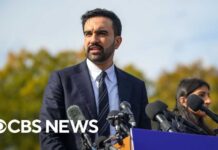
The United States denied a visa to Palestinian President Mahmoud Abbas for the United Nations General Assembly, citing Palestinian Authority failures to meet commitments and a threat to peace efforts.
Story Snapshot
- State Department says visa denials hold Palestinian leaders accountable for broken commitments.
- Palestinian officials call the move unjustified and a breach of the United Nations host agreement.
- Reports say dozens of Palestinian officials were affected in similar actions last year.
- Dispute revives a long fight over U.S. host rights versus United Nations access norms.
What Washington Decided and Why It Matters
The State Department said it would deny visas to officials from the Palestine Liberation Organization and the Palestinian Authority because they have not met their commitments and are undermining peace prospects. The department framed the action as a national security interest and a consequence for noncompliance. The decision again blocks Mahmoud Abbas from addressing world leaders in New York. The move signals continued pressure from the United States government, which says it seeks to change behavior through travel restrictions.
News outlets reported that last year’s action reached beyond Abbas to roughly 80 Palestinian officials, making it broader than past cases and ensuring the delegation could not attend in person. That scale made headlines because the United Nations General Assembly is designed for near-universal participation. The wider sweep also showed how the United States can use its role as host nation to exert leverage. Supporters say this enforces law and order. Critics argue it crosses a legal line.
How Palestinian Leaders and Allies Responded
The Palestinian Foreign Ministry called the decision unjustified and a political escalation, and said it violated the 1947 United Nations Headquarters Agreement that binds the host country to grant access to delegates. Al Jazeera reported that Palestinian officials asked Washington to reconsider and said they remain committed to international law and peace obligations. These statements aim to shift the focus from United States domestic law to international rules. They also press the United Nations to defend open access for all delegations.
United Nations reporting in the prior dispute shows how the body can adapt when visas are pulled. The General Assembly voted to let Abbas speak by video after the United States revoked visas for the delegation, keeping his voice in the debate while sidestepping the travel ban. That workaround reduces the immediate impact but does not solve the core fight. The core fight is whether the United States, as host, can block entry based on policy concerns while still meeting its agreement with the United Nations.
The Bigger Pattern: Law, Leverage, and Trust
Legal and diplomatic analysts note a long pattern of friction between United States visa control and the United Nations’ expectation of open doors during high-level week. Washington points to laws that restrict entry for those it believes break commitments or threaten security. Palestinian officials and some experts say the host agreement leaves little room for such denials tied to politics, and they cite past controversies as proof the rule should be universal. This clash will not end soon.
UN votes to allow Palestinian President Mahmoud Abbas to address the General Assembly by video after the US again denies him a visa. https://t.co/QccaZYyOeJ
— The Jerusalem Post (@Jerusalem_Post) September 17, 2026
For American readers, the stakes tie to trust in government and global standing. Supporters of the decision see a firm line against leaders they believe fuel conflict and dodge promises. Opponents warn that selective bans weaken the United Nations system and make global rules look optional for the powerful. Both concerns reflect a common worry: that elites and institutions bend rules to suit their goals, leaving ordinary people to bear the costs of endless conflict and broken diplomacy.
Sources:
rollingout.com, saudigazette.com.sa, arabnews.jp, pbs.org, state.gov
© dailyvantage.com 2026. All rights reserved.