(DailyVantage.com) – When routine law enforcement meets an unexpected wall of gunfire, the thin line between order and chaos is measured in seconds, strategy, and the strength of a bulletproof vest.
Story Snapshot
- Two Boone County deputies shot serving a warrant for overdue child support; suspect died by suicide after a standoff.
- Deputies followed protocol, negotiating for 30 minutes before forced entry.
- Bulletproof vests credited with saving both deputies’ lives; both survived and are recovering.
- The incident raises urgent questions about risk, policy, and the unpredictable nature of serving warrants for nonviolent offenses.
Deadly Unpredictability: Routine Warrant Service Turns Violent in Walton, Kentucky
Thursday night in Walton, Kentucky was supposed to be routine, at least, as routine as serving a felony warrant for overdue child support can be. Boone County deputies arrived at Justin Chapman’s apartment, warrant in hand, with every intention of resolving another day’s task. Instead, what unfolded was the kind of chaos that rarely makes the news but forever haunts those involved: a prolonged standoff, two deputies wounded, and a suspect dead by his own hand.
The clock started ticking at 9:20 p.m., when deputies knocked on Chapman’s door at the Towne Creek Crossing apartments. For thirty minutes, they tried everything short of force, calls, commands, negotiation through the closed door. Chapman, 39, refused to answer. Every minute stretched the tension, every unanswered knock carried the weight of uncertainty. The warrant was for a nonviolent offense, overdue child support, but the risk, as every officer knows, cannot be measured by the paperwork.
The Breach, The Gunfire, and The Aftermath
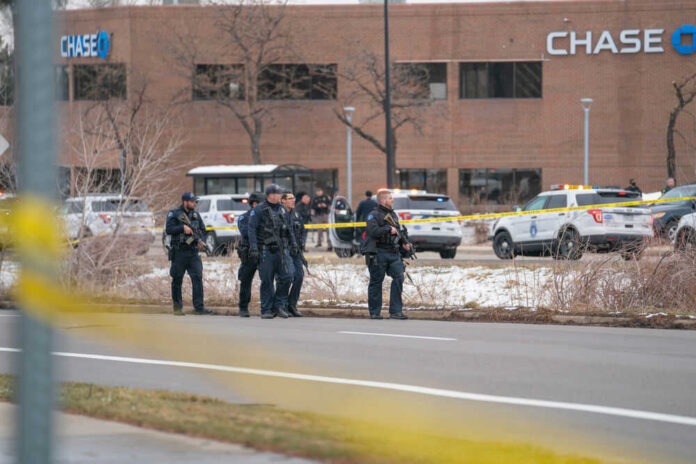
When deputies finally breached the door around 10:00 p.m., they were met by a hail of gunfire. In the chaos, two deputies fell, hit by bullets that could have been fatal if not for the Kevlar layered beneath their uniforms. The apartment, now a fortress, became the stage for a desperate standoff. Chapman barricaded himself inside. The law, for all its procedures and protocols, was on the outside looking in.
Emergency response was immediate. The wounded deputies were rushed to UC Medical Center. Chapman, cornered and alone, chose a final, irreversible act, he died by self-inflicted gunshot before law enforcement could bring him out alive. By sunrise, the sheriff’s office was left to answer the questions that always follow tragedy: What went wrong? Could this have been prevented? Why did a warrant for child support escalate to bloodshed?
Protocol, Discretion, and the Weight of Split-Second Decisions
Major Philip Ridgell, leading the response and the subsequent press conference, outlined the steps his team followed. Every department protocol was observed: deputies attempted communication for half an hour before breaching. Negotiation was prioritized. According to Ridgell, discretion and patience are not just policy, they’re a lifeline in tense situations. But policy, however sound, cannot account for the unpredictable human element on the other side of the door.
Boone County’s historical approach to warrant service has emphasized negotiation and de-escalation. Yet, as this case grimly demonstrates, even the most nonviolent warrants can turn perilous. The sheriff’s office publicly credited the deputies’ survival to their bulletproof vests, a silent reminder that every knock on a door might be the last. The broader law enforcement community is now grappling with the hard question: Should policies change when the stakes are so high, even for nonviolent offenses?
Ripples Across Community and Policy: What Comes Next?
The immediate aftermath saw two deputies in the hospital and a community in shock. Both deputies are expected to recover, one already discharged and the other improving. For the sheriff’s office, this was a “worst nightmare” scenario, a phrase no department wants to invoke, especially when the original warrant carried no threat of violence.
Beyond the hospital rooms and police tape, the impact reverberates through Boone County and beyond. Law enforcement agencies nationwide are watching, reevaluating their own warrant service procedures, and doubling down on officer safety. The incident has also ignited debate within the community: Was the breach necessary? Could negotiation have continued longer? Where is the line between public safety and escalation risk? These questions linger, unresolved, as officials prepare for possible policy reviews and mental health support initiatives for both law enforcement and families affected by similar tragedies.
Copyright 2025, DailyVantage.com.