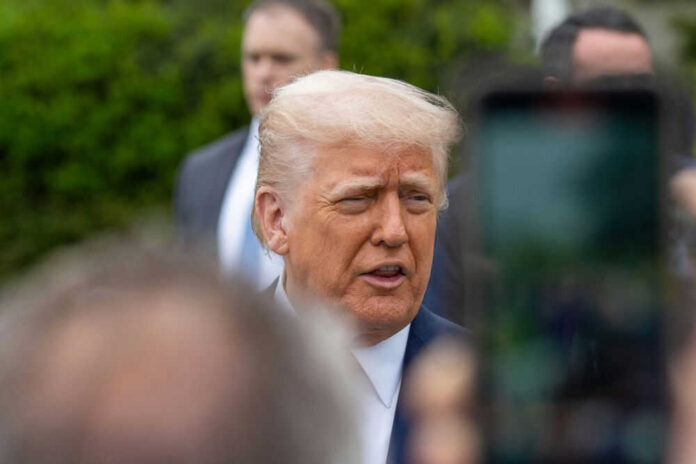
(DailyVantage.com) – The State Department’s new “America250” passport puts President Trump’s portrait inside a document Americans must show at foreign borders—without an opt-out for some applicants.
Quick Take
- The State Department confirmed a limited-edition passport design tied to America’s 250th anniversary in July 2026.
- The commemorative version places President Trump’s portrait and gold signature over the Declaration of Independence on interior pages.
- Applicants using the Washington Passport Agency are expected to receive the special design with no choice to decline it, while other locations keep the standard passport.
- Officials say security features remain unchanged and there is no added fee, but the government has not confirmed how many will be printed.
What the State Department Confirmed for America250
The U.S. State Department says it is preparing to release a limited number of specially designed passports for America’s 250th anniversary in July 2026. The agency’s public messaging emphasizes commemoration and continuity: the passports will feature customized artwork and enhanced imagery, while keeping the same security features that make the U.S. passport a high-trust travel document. Officials also indicated applicants will not pay an additional fee for the commemorative version.
Reporting across outlets converges on a key practical detail: the special design will be available exclusively through the Washington Passport Agency, while other passport offices and online renewal systems continue issuing the standard design. That distribution choice limits the rollout geographically but creates a real-world fairness issue for travelers who must use Washington for timing or administrative reasons. For those applicants, the design is not treated as an optional collectible add-on.
What’s Actually in the New Passport Design
Images and descriptions published by multiple news organizations describe an interior layout that departs from traditional passport art. The inside cover features President Trump’s portrait—reported to be from his second inaugural photograph—superimposed over the Declaration of Independence, with his signature rendered in gold. Coverage also describes the portrait and signature appearing across interior visa pages, again layered over Declaration text, blending a founding-era symbol with a current president’s personal branding.
The back cover retains more conventional patriotic imagery, including art associated with John Trumbull’s famous “Declaration of Independence” painting. That mix—traditional founding imagery paired with a sitting president’s likeness inside—helps explain why the change is landing as more than a graphic refresh. U.S. passports historically highlight national symbols and scenes rather than current political leadership, partly to keep the document above partisan cycles and maintain a stable national presentation abroad.
Mandatory Issuance in Washington Raises a Limited-Government Question
One of the most concrete points in the reporting is the lack of an opt-out for applicants at the Washington Passport Agency. Even supporters of President Trump may question why a federal office would remove consumer choice when the rest of the country is allowed to receive the standard design. From a limited-government perspective, the issue is not whether the imagery is “good” or “bad,” but why a mandatory design is being imposed when the government could offer two versions.
That tension matters because passports are not memorabilia; they are required documents for travel, work, and family obligations. Americans who need urgent service or who live closest to the Washington agency may have little practical ability to “vote with their feet.” When government creates a one-office rule—no choice at Washington, choice everywhere else—it invites questions about bureaucratic decision-making, equal treatment, and whether commemoration is being prioritized over citizens’ day-to-day needs.
Unanswered Questions: Quantity, Duration, and Precedent
The State Department has disputed a reported figure that 25,000 commemorative passports would be issued, labeling that number “fake news” without providing an alternative. Officials have also suggested the passports will be available only as long as supplies last, which implies scarcity but still leaves the public without a firm scope. That lack of specificity fuels predictable suspicion on both the right and the left about how these decisions are made and who benefits from the rollout.
State Department to Issue Limited-Edition Passports Featuring President Trump’s Portrait and Signature for America’s 250th Birthday
READ: https://t.co/PAno21vALO pic.twitter.com/n10GhBcke4
— The Gateway Pundit (@gatewaypundit) April 29, 2026
The longer-run significance is precedent. If a sitting president’s portrait becomes normalized inside passports, future administrations could be tempted to repeat the practice—turning a stable national document into a recurring political canvas. Critics have already argued this passport is part of a wider pattern of presidential imagery appearing on government items like coins and park passes. Supporters see a patriotic tribute in an anniversary year. Either way, the unresolved policy question is straightforward: should essential federal documents stay symbol-focused and non-personal, or start reflecting the leader of the moment?
Sources:
Trumps image on limited-edition passports for Americas 250th
Exclusive: State Dept. Finalizing Plan
State Department passport design Trump portrait
Copyright 2026, DailyVantage.com