A fatal late-night car crash into Berlin’s Brandenburg Gate is now colliding with fresh fears after a separate vehicle attack at nearby Pride celebrations left one dead and many injured.
Story Snapshot
- A 26-year-old Polish driver died after crashing a Mercedes into the Brandenburg Gate; police still have no clear motive.
- Days later, a separate vehicle attack near Berlin’s Pride parade killed one person and injured at least 16 others, sparking a manhunt.
- German police say early facts in both cases are uncertain, yet social media and pundits rushed to frame them as political or terrorist attacks.
- The confusion shows how fast narratives harden when dramatic events hit iconic places, while real answers arrive slowly, if at all.
What We Know About the Brandenburg Gate Crash
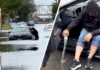
Late on a Sunday night, a Mercedes sedan slammed into the columns of the Brandenburg Gate, killing the driver and leaving the iconic monument scorched and damaged but still standing. Police said the crash happened around 11:30 p.m. after the car sped across Pariser Platz, a mostly pedestrian square in central Berlin. Emergency workers reported that the driver was “fatally injured in the crash” and that no one else was known to be hurt. Officers found no passengers inside the wrecked vehicle.
German outlets later reported that the driver was a 26-year-old Polish citizen, confirmed by Poland’s consul in Berlin. Witness accounts shared with police described the car moving at very high speed along Unter den Linden, striking a curb, then veering into the gate. Photos from the scene showed the car wedged between two of the monument’s pillars, underlining how violent the impact was. Fire damage and debris darkened the base of the gate, though officials said major structural harm appeared limited.
Investigators Still Lack a Clear Motive
Berlin police said from the start that the man’s identity and what exactly happened were “under investigation,” and they did not rush to label the crash an attack. A police spokesperson later told one outlet that a political motive or planned assault seemed unlikely at that point, but also stressed that “nothing can be ruled out.” Another local report quoted investigators saying the “death drive” at the gate remained puzzling, and even the driver’s relatives could not explain his behavior. No public record yet shows toxicology, medical reports, or a full crash reconstruction.
This leaves a frustrating gap: the public sees shocking images and hears of a young man dead at a world-famous monument, but gets only partial answers about why. Police have described speed, a curb impact, and loss of control, which fits an accident or a reckless act. Yet without data from the car’s event recorder, detailed forensics, or medical findings, it is impossible to say if this was intentional, a medical emergency, or a mix of bad choices and bad luck. For citizens already distrustful of officials, that uncertainty feels like evasion, even when it is simply honest caution.
A Separate Pride Attack Deepens Public Anxiety
While questions lingered about the Brandenburg Gate crash, Berlin was hit by another vehicle incident, this time clearly targeting people, not stone. Near the city’s Christopher Street Day Pride celebrations, a white vehicle drove into a crowd by Tiergarten park, close to the Brandenburg Gate area. Police and fire officials said one person was killed and at least 17 were injured, some with life-threatening wounds. The vehicle then continued into the park and crashed into a tree, where officers found it empty.
🚨 Incident Overview:
A vehicle entered the crowd at Berlin’s Christopher Street Day (CSD) Pride parade, resulting in one fatality and at least 15 injuries, with several individuals in life‑threatening condition.🧭 Location & Sequence of Events:
– The vehicle, described as a…— NewsTicker360 (@NewsTicker360) July 25, 2026
Authorities launched a large manhunt for the driver or drivers who fled, calling it a “major police operation” and saying they were still working to confirm how many suspects were involved. Early statements did not name a motive and did not tie the Pride attack to the earlier Brandenburg Gate crash. Still, the location, timing, and target led many observers to assume terrorism or hate crime. Social media commentary leapt toward theories about migrants, extremists, or deep-state cover-ups long before police could finish basic fact-finding.
Why These Crashes Feed a Bigger Crisis of Trust
For many Americans watching from afar, these Berlin events hit familiar nerves. People on the right see open borders, weak policing, and elites who downplay threats until it is too late. People on the left see hate attacks against minorities and a system that never seems to protect the vulnerable. In both camps, there is a shared sense that regular citizens are given spin instead of straight facts when something frightening happens in a capital city. That feeling is not unique to Germany.
Recent history gives people reason to be wary. In 2022, another Berlin car attack killed a teacher and injured many students on a busy street. Police later said it was an intentional act by a mentally ill driver, not classic terrorism, but that answer took time and left deep scars. Similar questions have surrounded a car that hit the gate of the German leader’s office, where police also struggled to pin down motive quickly. Each new crash at a symbolic site, from the Brandenburg Gate to government buildings, lands on this long record of half-known stories and delayed clarity.
How Media and Symbols Can Distort What We Learn
These cases also show how media habits can twist public understanding. Early news about the Brandenburg Gate crash focused on dramatic images and the famous site, even while police were saying cause and motive were unknown. Coverage of the Pride attack blended real casualty figures with commentary about terrorism patterns, long before investigators had a suspect in hand. When outlets and influencers rush in with high emotion and low detail, they fill the vacuum where vetted facts should be.
The result is confusion that crosses borders. Some people now mix up the Brandenburg Gate crash, the Pride attack, and older Berlin incidents into one vague story of “another attack,” even though the facts differ sharply from case to case. For citizens already tired of double standards and elite spin, this blur feeds the belief that someone, somewhere, is hiding the real story. The harder truth is more mundane and more troubling: our systems for finding and sharing the truth are slow, while our systems for pushing fear and outrage are lightning fast.
Sources:
redstate.com, dw.com, seattletimes.com, standard.co.uk, rmb.reuters.com, iamexpat.de, wiadomosci.onet.pl, youtube.com, dein-erkelenz.de, caliber.az, bbc.com
© dailyvantage.com 2026. All rights reserved.