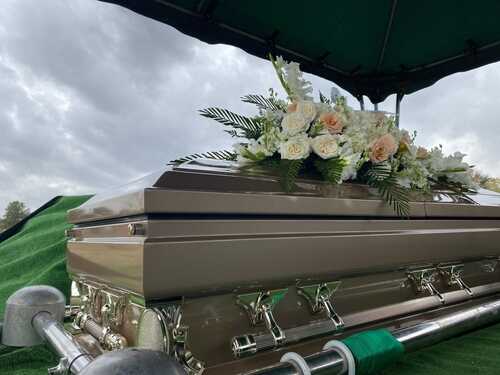
(DailyVantage.com) – A legendary NFL career that started with promise, battled addiction, and ended with redemption has closed its final chapter, as Luis Sharpe, the iron-willed All-Pro tackle and Cardinals mainstay, has died at 65, sparking a wave of reflection on the price of greatness and the fragility beneath the helmet.
At a Glance
- Luis Sharpe, stalwart left tackle for the Cardinals and three-time Pro Bowler, has died at age 65.
- Sharpe’s journey: from Cuban immigrant to NFL All-Pro, to addiction survivor and recovery advocate.
- The Cardinals and NFL community mourn his passing while celebrating a legacy of resilience.
- Sharpe’s story renews focus on mental health and addiction recovery for retired athletes.
Luis Sharpe: From Havana to NFL Greatness
Luis Sharpe’s life is a study in contrasts, a classic American tale, complete with triumph, tragedy, and a final act of redemption. Born in Havana, Cuba in 1960, Sharpe arrived in Detroit at six, a young immigrant chasing the American dream in a city where grit and hard work meant survival. Football offered his pathway. Rising through the ranks at UCLA, he was drafted 16th overall by the St. Louis Cardinals in 1982, instantly becoming the cornerstone of their offensive line. Over thirteen seasons, as the Cardinals moved from St. Louis to Phoenix and finally became the Arizona Cardinals, Sharpe started 189 games and earned three trips to the Pro Bowl, an iron man in a league built on toughness.
But as so often happens, the punishing toll of the NFL extended far beyond the gridiron. Sharpe’s story would become one of not only athletic endurance, but personal struggle and, ultimately, hard-won hope.
Adversity Off the Field: Struggles and Survival
Sharpe’s career ended in 1994, closing a chapter that would have been the envy of many, if it weren’t for the shadow that followed. Like too many NFL veterans, Sharpe battled addiction and legal problems after the cheers faded. His descent into substance abuse was well-documented and, frankly, a searing indictment of an NFL system that too often leaves its warriors to fend for themselves once their bodies are used up and their contracts expire. Sharpe’s journey through addiction was not just a private battle, it became public, ugly, and, at times, humiliating. Yet, in a twist worthy of a Hollywood script, Sharpe clawed his way back. After hitting rock bottom, he achieved sobriety, dedicating his life to counseling others stuck in the same cycle of despair. By 2015, he was back in Michigan, working in recovery clinics, telling anyone who would listen that his greatest curse had become his greatest blessing: “I feel more significant than I ever did when I was playing professional football. My life is better today.”
Sharpe’s post-NFL struggles echo throughout the league, reminders that no accolade, contract, or fame can shield athletes from the consequences of a system that often values performance over people. His story is a wakeup call: if a man as strong as Sharpe can fall, so can anyone.
A Legacy of Resilience and a Call for Change
Sharpe’s passing, announced by his wife Tameka Williams-Sharpe and confirmed by the Cardinals, has triggered tributes from across the sports world. Cardinals owner Michael Bidwill hailed Sharpe’s “strength and toughness,” on and off the field, while former teammates and fans recalled a player who never missed a snap and never gave up, no matter the odds. Yet, beneath the eulogies lies a hard truth: the NFL’s track record on post-career support is patchy at best. As the league and its franchises lionize their fallen heroes, they must reckon with the real cost paid by players like Sharpe, men who sacrificed their bodies and, sometimes, their futures for the game.
Sharpe’s journey from Cuban refugee to football legend, from addiction to recovery counselor, is more than a highlight reel, it’s a blueprint for resilience and a warning for the next generation. His death at 65 is a stark reminder that the fight doesn’t end at the final whistle, and that the measure of a man is not just in the games he wins, but in the battles he fights long after the crowd has gone home.
Copyright 2025, DailyVantage.com