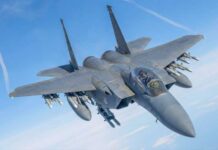
(DailyVantage.com) – Russian and Chinese bombers flying shoulder to shoulder around Japan are a loud warning that America’s enemies are testing the free world while Washington debates woke priorities and globalist fantasies.
Story Highlights
- Russian and Chinese bombers conducted joint air patrols around Japan, forcing Tokyo to scramble fighter jets.
- The flight underscores tightening military cooperation between Moscow and Beijing near key U.S. allies.
- Japan faces rising tension with China while relying heavily on American security guarantees.
- Conservatives see the patrol as proof that peace comes from strength, not from appeasement or globalist wishful thinking.
Escalating Russian, Chinese Air Patrols Around Japan
Japan’s defense ministry reported scrambling jets after Russian and Chinese air forces carried out joint bomber patrols around the country, a move that put long-range aircraft unnervingly close to Japanese airspace. These were not routine training flights over home territory; they were coordinated patrols in sensitive air corridors, clearly designed to probe defenses and test responses. For a U.S. ally already worried about Chinese pressure in the East China Sea, this kind of show of force raises real questions about future stability.
China and Russia have been deepening military cooperation for years, but joint bomber patrols near Japan mark a noticeable escalation in both symbolism and risk. Japan lies at the center of America’s Pacific defense network, hosting critical U.S. air and naval bases that would be indispensable in any conflict over Taiwan or the broader Indo-Pacific. When Moscow and Beijing send bombers together around Japan, they are signaling not just to Tokyo, but to Washington, that they are willing to coordinate pressure on U.S. allies.
Japan’s Strategic Chokepoints and U.S. Commitments
Japan’s islands sit astride maritime and air chokepoints that connect the Pacific to the Sea of Japan and the broader Asian mainland, making its territory vital for any serious U.S. defense posture in the region. The joint patrols passed close to areas where Japan routinely tracks Chinese incursions near the Senkaku Islands, a recurring flashpoint. Each time Japan scrambles fighters, it spends money, burns fuel, and wears out aircraft, while China and Russia gather data on response times and tactics, sharpening their planning.
For American conservatives who value a strong but focused national defense, these patrols are a reminder that real threats come from revisionist powers, not from climate summits or endless bureaucracy. When Russia and China coordinate near a core U.S. ally, they implicitly test whether America’s security guarantees are credible. If Washington appears distracted by domestic ideological battles or soft-pedals support for allies, adversaries may calculate they can push harder. That calculation endangers not just Japan’s security, but long-term peace and prosperity across the Indo-Pacific.
Lessons After Years of Weakness and Distraction
During prior left-leaning administrations, U.S. defense debates often revolved around budget cuts, globalist diplomatic gestures, and social experiments inside the military, while Russia and China quietly expanded their arsenals and reach. Joint bomber patrols around Japan illustrate the cost of that drift: adversaries gained confidence to operate closer to U.S. allies with fewer consequences. Conservatives argue that deterrence eroded when Washington emphasized climate accords and DEI mandates instead of hard power, clear red lines, and energy independence to finance a strong defense.
Trump’s return to the White House has shifted the tone back toward peace through strength, tighter border security, and rebuilding military readiness, but damage from years of complacency cannot be reversed overnight. The Russia–China patrol underscores how quickly power vacuums get filled when America signals retreat or confusion. For voters frustrated by inflation, open-border chaos, and ideological overreach, foreign policy may feel distant, yet these patrols show how adversaries everywhere watch for signs of American weakness, hoping to exploit them.
Why This Matters for American Families and Constitutional Values
Parents concerned about grocery bills and crime may wonder why Russian and Chinese bombers around Japan should matter to them, but economic security at home depends on stable trade routes and predictable global markets. A serious crisis in East Asia could disrupt supply chains, drive up energy prices, and hand Beijing even more leverage over critical goods. Conservatives who believe in limited government also recognize that wars born of neglect and drift often lead to bigger bureaucracies, higher spending, and new government intrusions into daily life.
Going forward, the joint patrol around Japan should sharpen debates in Washington about priorities: secure borders, strong deterrence, and respect for constitutional liberties versus endless foreign commitments without strategy. A clear-eyed approach means backing allies like Japan with real capabilities while demanding that U.S. resources are used to defend core interests, not fund ideological crusades abroad. Russia and China have sent their message in the skies around Japan; it is up to American leaders, and the voters who choose them, to respond with seriousness and strength.
Copyright 2025, DailyVantage.com