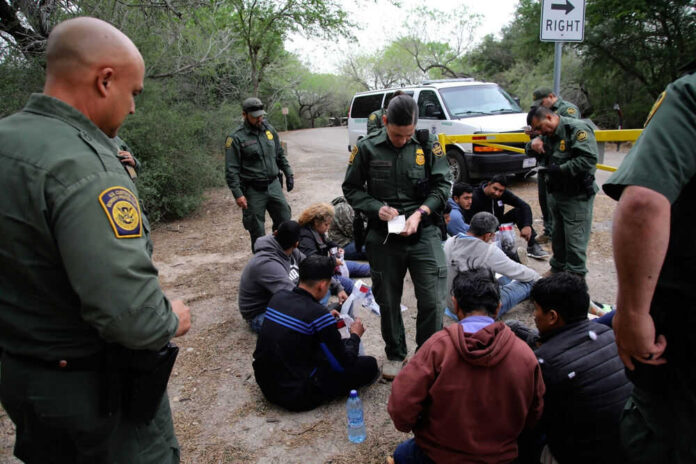
(DailyVantage.com) – In just ten days, Florida law enforcement and ICE triggered a political earthquake by arresting 230 criminal illegal aliens, an operation whose shockwaves will ripple through immigration policy and the 2026 election cycle.
Story Snapshot
- ICE and Florida agencies arrested 230 non-citizens with criminal convictions over a 10-day sweep
- Most of those detained had felony records, including violent and sexual offenses
- Operation signals renewed, large-scale state-federal cooperation amid fierce national immigration debates
- Legal, political, and community aftershocks will shape Florida for years to come
Florida’s Largest Targeted Immigration Crackdown in Years
From October 28 to November 6, 2025, Florida became the stage for one of the largest coordinated immigration enforcement actions in recent memory. ICE and the Florida Department of Law Enforcement zeroed in on non-citizens with criminal backgrounds, not random sweeps, but a methodical hunt for those with prior convictions for crimes ranging from aggravated assault to sexual battery. The numbers alone, 230 arrests, 80% felons, are designed to send a signal, not just to would-be offenders, but to lawmakers and voters.
Governor Ron DeSantis, never one to shy from the spotlight, lauded the operation as proof that Florida stands as a bulwark against what he calls “federal inaction.” The timing was no accident. With national debates over immigration at a fever pitch, Florida’s operation was as much about optics and message as it was about public safety. Law enforcement agencies in Miami-Dade, Broward, and Hillsborough counties found themselves thrust into the national conversation, their cooperation with ICE under scrutiny from both sides of the aisle.
Political Calculus and the Shadow of Election Season
The arrest sweep lands at a pivotal moment in American politics. As the 2026 elections loom, immigration remains a top-tier issue for voters over 40, especially in states like Florida where the electorate leans conservative and expects action, not rhetoric. For DeSantis and his allies, these numbers will be campaign gold: proof of “results,” evidence of resolve, and a ready-made answer to critics who call state-level enforcement excessive or redundant.
But beneath the headlines, the operation exposes deeper fault lines. Immigrant rights groups, led by the ACLU of Florida and the Florida Immigrant Coalition, responded with a volley of lawsuits and public statements. They argue that broad sweeps compromise due process and risk tearing apart families, claims that resonate in communities where fear and mistrust of law enforcement are already high. Legal aid organizations are bracing for a surge in caseloads, while advocacy groups warn of a chilling effect: fewer crime victims willing to cooperate with police, more children left without parents, and a further erosion of trust between residents and authorities.
State-Federal Synergy or Overreach? The Policy Legacy
The operation’s unprecedented scale was no accident. Florida has positioned itself as a model of state-federal immigration alignment, with local sheriffs deputized under ICE’s 287(g) program and a series of executive orders from the governor’s office mandating compliance with federal detainers. This is the antithesis of “sanctuary” policies seen elsewhere; in Florida, the message is clear: cooperate, or get out of the way.
Supporters insist that this model keeps dangerous offenders off the streets, pointing to the long list of charges, drug trafficking, sexual battery, burglary, attached to the arrestees. Critics, meanwhile, counter that the dragnet sometimes catches those whose crimes are old, minor, or already adjudicated, raising questions about proportionality and the risk of collateral damage. Academic voices from the University of Miami and the Florida Policy Institute highlight another angle: the economic impact, especially in agriculture and the service sector, where undocumented labor is critical and sudden removals can snarl entire industries.
Aftershocks: Legal Battles, Community Fears, and the Next Phase
As of mid-November, most of those arrested remain in ICE custody, awaiting removal proceedings or mounting legal challenges. Habeas petitions are piling up in federal courts, with advocacy groups focusing on conditions of detention and the scope of ICE’s authority. The legal landscape is shifting rapidly: ongoing litigation over Florida’s anti-sanctuary law (SB 168) and new challenges to the operation itself could set precedent for years to come.
The operation’s psychological impact is harder to quantify but no less real. Fear among immigrant communities has spiked, with reports of parents keeping children home from school and avoiding public spaces. At the same time, supporters of tough enforcement argue that visible action is exactly what’s needed to restore public confidence and deter further lawlessness. The debate, like the operation, is far from over, and as Florida’s experiment in large-scale, targeted enforcement plays out, other states will be watching, learning, and, perhaps, preparing their own versions of the “Florida model.
Copyright 2025, DailyVantage.com . ”