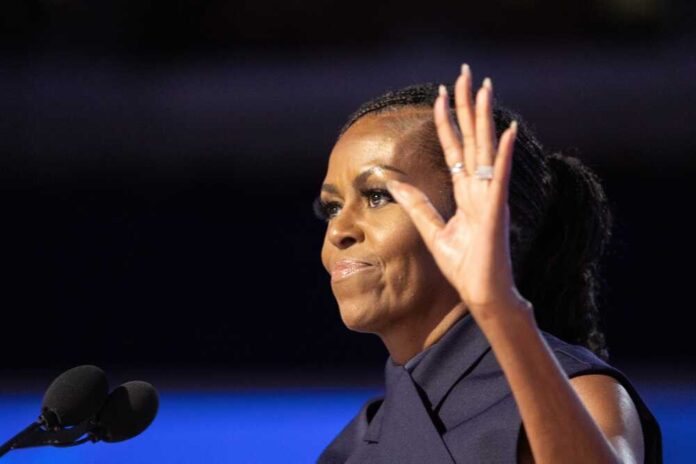
(DailyVantage.com) – Eric Swalwell’s vow to “bury” Republicans marks a dramatic shift from the conciliatory approach famously championed by Michelle Obama, setting the stage for a fierce redistricting battle.
Story Snapshot
- Eric Swalwell rejects Michelle Obama’s diplomatic approach, opting for aggressive redistricting tactics.
- California Democrats consider overriding independent commissions to counter Texas GOP.
- The redistricting arms race threatens the integrity of nonpartisan reforms.
- Escalating tensions could lead to long-term democratic and legal challenges.
The Redistricting Battlefield
Eric Swalwell’s recent remarks highlight a significant shift in Democratic strategy, moving from a stance of decorum to readiness for aggressive redistricting. As Texas Republicans push for congressional maps that favor GOP dominance, California Democrats, led by Swalwell and Governor Gavin Newsom, are contemplating similar tactics in retaliation. This shift points to a broader strategy of Democratic leaders embracing a “fight fire with fire” mentality, prioritizing electoral gains over former commitments to nonpartisan reforms.
Swalwell’s rhetoric underscores the high stakes involved in the redistricting process, framing it as a necessary defense of democracy. Yet, this approach risks undermining independent commissions established by voters to ensure fair and nonpartisan redistricting. The potential override of these commissions raises legal and ethical questions, challenging previous Democratic commitments to electoral fairness and reform.
Historical Context and Developments
Redistricting has long been a contentious issue in American politics, with both parties accused of gerrymandering to secure electoral advantages. Traditionally, some blue states, like California, have implemented independent commissions to mitigate partisan influence. However, recent GOP maneuvers in Texas, aiming to gain up to five additional House seats, have intensified the redistricting arms race. In response, Texas Democrats have resorted to tactics such as fleeing the state to prevent a quorum, echoing past efforts to stall controversial legislation.
The current escalation reflects broader national debates over election integrity and democratic norms. As both parties prepare for the 2026 midterm elections, the potential for heightened conflict and legal challenges looms large. This environment has prompted figures like Swalwell to abandon restraint, advocating for aggressive measures as a defense against perceived Republican overreach.
Stakeholders and Motivations
Key players in this unfolding drama include Democratic figures like Swalwell and Newsom, who advocate for redistricting as a means to counter GOP gains and protect vulnerable communities. Meanwhile, Texas Republican leaders, backed by President Donald Trump, continue to advance their redistricting agenda, framing it as essential for maintaining Republican control. Independent commissions, tasked with ensuring nonpartisan redistricting, face challenges as partisan tactics dominate the landscape.
Eric Swalwell rejects Michelle Obama's 'when they go low, we go high' message, vows to 'bury' Republicans https://t.co/fjCG84uXSA #FoxNews
— SANDALIO CARMONA (@SANDALIOCARMONA) August 18, 2025
The motivations driving these actions are complex, with Democrats seeking to protect electoral integrity and Republicans aiming to maximize legislative advantages. However, the risk of eroding public trust in nonpartisan reforms and the entrenchment of gerrymandering as a bipartisan norm cannot be ignored. As tensions escalate, the potential for federal intervention or Supreme Court review increases, posing long-term implications for American democracy.
Implications and Expert Perspectives
The short-term implications of this redistricting battle include intensified partisan conflict and potential legal challenges in both Texas and California. The possible override of independent commissions could undermine reform efforts and lead to significant public backlash. In the long term, the erosion of trust in electoral processes and the normalization of gerrymandering as a political strategy threaten democratic norms.
Political analysts warn of a “gerrymandering arms race,” with both parties abandoning restraint in pursuit of short-term gains. Experts highlight the fragility of nonpartisan reforms and the risk of a nationwide escalation in redistricting conflicts. As the situation unfolds, the role of national party leaders, the courts, and independent commissions will be crucial in determining the future of electoral integrity and democratic governance in the United States.
Copyright 2025, DailyVantage.com.