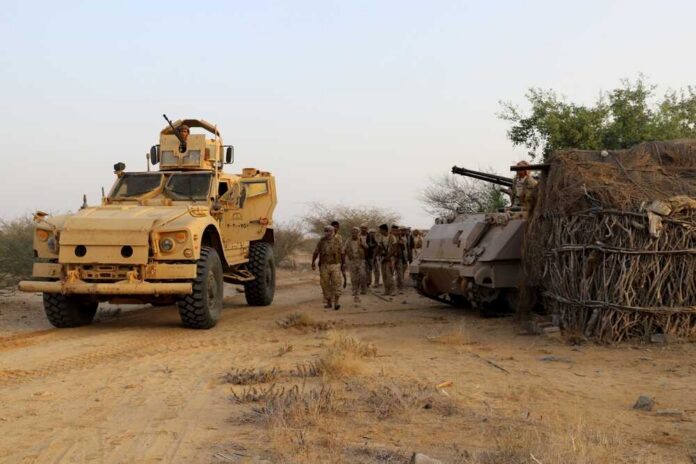
(DailyVantage.com) – Three weeks into the Iran war, President Trump is staring down the one escalation that can’t be “undone”: sending American ground troops into the fight.
Story Snapshot
- U.S. and Israeli forces launched Operation Epic Fury on Feb. 28, 2026, unleashing nearly 900 strikes in about 12 hours and killing Iran’s Supreme Leader Ali Khamenei.
- Iran responded with hundreds of missiles and thousands of drones aimed at U.S. and regional targets, while Hezbollah retaliated from Lebanon.
- Trump said U.S. forces sank nine Iranian naval vessels and “largely destroyed” Iran’s navy, shifting the conflict into a broader, multi-domain fight.
- Iran’s leadership succession moved forward anyway, with Mojtaba Khamenei appointed despite Trump publicly signaling opposition.
- The biggest unresolved question remains whether the U.S. will keep pressure from the air and sea—or commit ground forces with open-ended risks.
Operation Epic Fury Redrew the Map—But Not the Endgame
U.S. and Israeli forces opened Operation Epic Fury on February 28, 2026, with a massive air campaign targeting Iranian missiles, air defenses, military infrastructure, and senior leadership. The opening wave reportedly included nearly 900 strikes in roughly 12 hours and killed Iran’s Supreme Leader Ali Khamenei along with other officials. Those tactical results were immediate and dramatic, but the research available so far does not confirm a decisive political settlement or a clear off-ramp as the conflict enters its fourth week.
Iran’s retaliation has shown why “mission accomplished” banners don’t belong in modern war planning. Available reporting describes Iran launching hundreds of retaliatory missiles and thousands of drones at U.S. embassies, military installations, and oil infrastructure across the region. Iranian-backed Hezbollah also conducted retaliatory operations from Lebanon on March 1–2. These actions underscore a familiar reality: even when a regime is rocked at the top, its ability to strike through missiles, drones, and proxies can persist.
Trump’s Naval Claims Signal Leverage—And Escalation Pressure
President Trump publicly stated on March 1 that U.S. forces sank nine Iranian naval vessels and “largely destroyed” the Iranian navy. If accurate, that kind of maritime dominance can create leverage by limiting Iran’s ability to contest shipping lanes or project power at sea. At the same time, naval success doesn’t automatically end a conflict that also plays out through missiles, drones, and proxy forces. The research provided does not establish whether Iran’s remaining capabilities are meaningfully degraded or simply shifting to asymmetric attacks.
Economic shockwaves are already traveling far beyond the battlefield. Shipping lines reportedly rerouted to avoid the Strait of Hormuz and the Red Sea even before Iran threatened to fire on vessels, reflecting how quickly markets price in risk when the Middle East is on edge. Reporting also cites more than 2,000 deaths across Iran, Lebanon, and Israel, with hundreds of thousands displaced in Lebanon and large numbers of travelers stranded across the region. Those disruptions matter to Americans because energy prices and supply chains don’t stop at the water’s edge.
Succession in Tehran Exposed Limits of Outside Control
War planners can destroy targets, but they can’t always dictate political outcomes—especially inside a sovereign country under attack. On March 5, an Israeli air strike reportedly targeted Iran’s Assembly of Experts amid concerns about leadership succession. Trump publicly expressed a desire to influence the choice of successor and signaled opposition to Mojtaba Khamenei. Despite that, Iran’s Assembly of Experts appointed Mojtaba Khamenei as the new supreme leader several days later, highlighting the limits of U.S. influence over Iran’s internal power mechanics.
The Ground-Troops Decision Is the Point of No Return
The central question now is whether the administration escalates to ground operations or accepts a negotiated resolution that falls short of total victory. The research frames this as an irreversible threshold: air and naval campaigns can be expanded or narrowed quickly, but ground troops create a long-duration commitment, higher U.S. casualty risk, and a complex exit problem. The provided material does not confirm that Trump has decided either way as of March 18, only that the conflict continues and the decision point is looming.
Recent history hangs over the debate because the U.S. reportedly undertook its largest Middle East military buildup since the 2003 Iraq invasion. That comparison doesn’t prove the same outcome, but it explains why many Americans—especially those tired of endless wars—demand clear objectives, constitutional accountability, and defined limits before any boots hit the ground. The available sources also leave gaps: they do not detail ceasefire talks, congressional actions, or precise measures of Iran’s remaining military capacity, so any assessment should stay anchored to confirmed facts.
For now, the facts point to a war that has delivered stunning early battlefield results while keeping the hardest strategic choice alive. Trump’s team can argue that decisive force deterred threats and degraded Iran’s military, but the continued missile-and-drone retaliation and proxy attacks show the conflict is not simply “over” because a leadership figure was removed. With Americans still paying for years of inflation and mismanagement at home, the political reality is that a major ground commitment would face intense scrutiny.
Sources:
War: US-Israel vs Iran Timeline 2026
Iran Update, Evening Special Report: March 1, 2026
Iran’s 50-year war on America: A timeline of terror and what comes next
Copyright 2026, DailyVantage.com