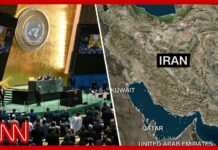
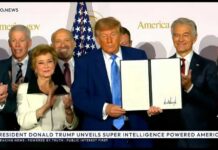
Iranian officials say they are not trying to kill President Trump, even as court records and state TV broadcasts point to plots and chilling threats tied directly to his name.
Story Snapshot
- U.S. prosecutors have charged men they say were pushed by Iran’s Revolutionary Guard to plan Trump’s assassination.
- Iranian state media has aired images of Trump with the message “this time it will not miss the target.”
- Tehran denies it is actively trying to kill Trump and even sent Washington written assurances.
- Conflicting messages fuel fears that foreign enemies and “deep state” players are playing politics with a president’s life.
Concrete Plots And Chilling Messages
In the past few years, the United States Department of Justice has brought at least two cases that it says are tied to Iranian plans to kill Donald Trump. One case involves Farhad Shakeri, who investigators say worked with Iran’s Islamic Revolutionary Guard Corps and admitted in a phone call that he was tasked to “survey and ultimately assassinate” Trump, with a possible attack date in October. Another case involves Pakistani national Asif Merchant, arrested in 2024 over a plot to kill United States politicians, possibly including Trump, in revenge for the drone strike that killed Iranian commander Qassem Soleimani. These cases show that the idea of killing Trump has moved beyond talk and into alleged planning by real people on the ground, even if those plans were stopped before they could be carried out.
Iranian state media has also crossed an important line in its messaging about Trump. In January 2026, state television aired an image of Trump taken during the 2024 assassination attempt at his Pennsylvania rally, alongside the words, “This time it will not miss the target.” Reports from Agence France-Presse described this as one of the most explicit threats ever aired by Iranian media toward an American leader. For many Americans, both conservative and liberal, this feels like proof that foreign powers now treat political murder as a normal tool of power, and that the United States government is struggling to keep up.
Warnings, Denials, And Intelligence Confusion
United States intelligence and security agencies have taken these threats seriously enough to change how they protect Trump. The National Security Council warned the Secret Service of increased danger from Iran, leading to tighter security around the former president. United States officials say they have monitored a potential Iranian plot to harm Trump that is separate from the 2024 Pennsylvania shooting, which investigators found had no link to Iran. Yet at the same time, Iran has pushed back hard on the idea that it is actively trying to kill Trump. Tehran sent written assurances before the 2024 election saying it was not seeking Trump’s assassination, even while insisting the Soleimani strike was illegal and vowing revenge in other ways. This mix of warnings and denials leaves citizens wondering who to trust and whether officials are being straight about the danger.
Iran’s foreign ministry has publicly rejected American media reports that it is plotting Trump’s death, calling the claims “malicious” and politically driven. Iranian spokespeople say their country had nothing to do with the armed attack on Trump in Pennsylvania and argue that unnamed officials are inflating the threat for their own agendas. Yet United States National Security Council spokesperson Adrienne Watson has said the intelligence about Iranian threats is treated as a top national security matter. When one side flatly denies and the other says the danger is deadly serious, everyday Americans see more proof that global power games and elite messaging matter more than clear truth and basic safety.
Why This Matters For Ordinary Americans
For many citizens, the biggest worry is not just that Iran may want Trump dead, but that the growing web of threats shows how fragile basic political safety has become. Time magazine notes that Trump has long said he is “number one” on Iran’s kill list and that the United States has now seen multiple foreign-linked plots against high-profile figures, including Trump, Vice President JD Vance, and business leaders. At the same time, experts interviewed in that report say Iran often prefers using proxy operatives or inspiring “lone wolf” attackers rather than sending official agents to carry out killings. That pattern fits a wider concern shared by both right and left: powerful states and shadowy networks can stir up violence while keeping their hands technically clean, leaving regular Americans stuck in a world where no one is clearly accountable.
🚨BREAKING WAR 🔥: Trump’s reaction to the deaths of two U.S. soldiers was unusually restrained: “Very sad… it’s in service to our country.”
He repeated the nuclear line “we’re never allowing Iran to have a nuclear weapon” but offered no threat, no deadline, no retaliation.…— The Revival Guy🔥 (@David23hi) July 18, 2026
People who already feel let down by Washington see this story as one more sign that the system protects itself first and citizens last. Assassination threats against a sitting president should unite both parties in defense of basic rule of law, yet the response has been slow, confused, and deeply political. Iran’s leaders frame revenge for Soleimani as their “legitimate right and duty,” while American leaders argue over how hard to push back and how much to share with the public. The result is a dangerous mix: foreign regimes openly flirting with political murder, domestic elites trading blame, and a public left to wonder if anyone in power is truly focused on protecting lives rather than protecting narratives.
Sources:
feedpress.me, cnn.com, bbc.com, theatlantic.com, politico.com, aljazeera.com
© dailyvantage.com 2026. All rights reserved.