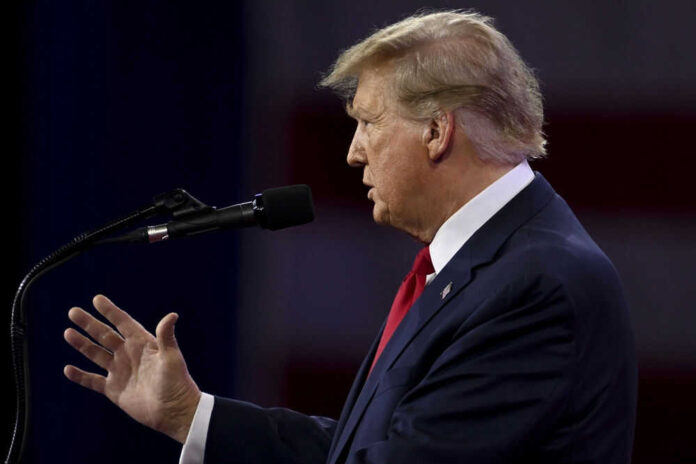
(DailyVantage.com) – President Trump’s sweeping executive order to mandate voter ID and restrict mail-in voting nationwide is igniting a fierce constitutional showdown and promises to reshape the debate over American election integrity.
Story Snapshot
- Trump’s executive order requires voter ID in all U.S. elections and sharply limits mail-in voting.
- Federal courts have already blocked major portions as unconstitutional, citing states’ rights.
- Widespread legal opposition from states and civil rights groups challenges the order’s legitimacy.
- The battle raises urgent questions about federal power, election integrity, and voter access.
Trump Moves to Mandate Voter ID and Restrict Mail-In Voting
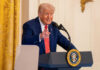
In August 2025, President Donald Trump announced on Truth Social that he would sign an executive order requiring every voter in U.S. elections to present government-issued identification, with no exceptions. The order also attempts to restrict mail-in voting almost entirely, reserving it only for the severely ill and military personnel overseas. Trump’s action marks the first time a sitting president has sought to mandate voter ID and limit mail-in voting nationwide through executive power, a move cheered by many conservatives frustrated by years of what they view as lax election security and “woke” leftist agendas undermining the vote.
Trump’s announcement follows years of claims, repeatedly dismissed by federal investigations and courts, that widespread voter fraud marred recent elections. The new executive order directs the Election Assistance Commission to oversee implementation and instructs federal agencies to require documentary proof of citizenship for federal elections. These sweeping measures have drawn immediate backlash from Democratic-led states, civil rights groups, and legal experts who argue that the order violates the U.S. Constitution, which gives states primary authority over election administration.
Legal Challenges and Constitutional Clashes Erupt Nationwide
The ink was barely dry on Trump’s order before 19 states filed lawsuits insisting the federal government lacks authority to dictate state-run election procedures. Federal courts moved quickly, with U.S. District Judge Denise J. Casper issuing a preliminary injunction in June 2025 that blocked significant portions of the order, citing constitutional concerns. The legal consensus among constitutional scholars is clear: presidents do not possess unilateral power to regulate voter eligibility or election methods, which are protected as state prerogatives under the Constitution. This has set the stage for a high-stakes legal battle likely to reach the Supreme Court.
Despite the injunction, several Republican-led states have begun enacting stricter voter ID laws and limiting mail-in ballots in anticipation of the federal order’s possible survival. Meanwhile, state attorneys general and secretaries of state have become key figures, either fighting to implement the order or challenging it as federal overreach. The resulting administrative confusion is already impacting election planning for 2026, with some states unsure whether to follow federal directives or court rulings.
Election Integrity vs. Voter Access: Divided Reactions and Broader Impacts
Trump’s supporters frame the executive order as a long-overdue correction to years of what they see as leftist policies that enabled fraud and eroded public trust in elections. They argue that voter ID requirements are common sense, essential for protecting the integrity of the ballot box, and widely supported by the American public. On the other side, critics warn that the order risks disenfranchising millions, especially minorities, the elderly, and low-income voters, who may struggle to obtain the required identification. Civil rights organizations also warn that restricting mail-in voting could suppress turnout among legitimate voters, particularly those with health challenges or limited mobility.
Expert analysis underscores these concerns. Legal authorities note that similar federal attempts to dictate state election procedures have been struck down by the Supreme Court. Election security specialists point out that there is no credible evidence of rampant fraud that would justify such sweeping measures. The ongoing legal uncertainty is driving up administrative costs for states and fueling political polarization, as each side claims to defend the true spirit of American democracy.
State Authority, Federal Power, and the Road Ahead
The battle over Trump’s executive order is far from over. With courts blocking implementation for now and the Supreme Court likely to weigh in, the fate of federal voter ID mandates and mail-in voting restrictions remains uncertain. What’s clear is that the fight has energized both supporters and opponents, with each side warning of dire consequences if the other prevails. For many conservatives, the order represents a vital stand for election integrity, traditional values, and constitutional principles. For opponents, it is a dangerous overreach that threatens core democratic rights and state sovereignty. As legal challenges mount and the nation heads toward another contentious election cycle, the outcome will shape not just how Americans vote, but who gets to participate in the democratic process.
Trump to sign executive order mandating voter ID: ‘NO EXCEPTIONS’ https://t.co/kduj3ufF4l
— HP McLovincraft (@HellboundNDown) September 1, 2025
As this constitutional battle plays out, voters and officials alike are left navigating a landscape of uncertainty, with the foundational question of who controls American elections, and how they are conducted, hanging in the balance.
Copyright 2025, DailyVantage.com.