(DailyVantage.com) – Trump’s vow to invoke the Insurrection Act, no matter what courts or governors say, signals a political and constitutional showdown unseen in decades, with the fate of American streets and federalism hanging in the balance.
Story Snapshot
- Donald Trump threatens to deploy the U.S. military in cities if deadly unrest erupts, even if blocked by courts or local officials.
- The Insurrection Act of 1807, rarely used, would give the president sweeping powers to use military force domestically.
- Legal and political battles are intensifying between federal authority and state sovereignty over control of law enforcement.
- Experts warn of profound risks to civil liberties, federalism, and civil-military relations if the Act is invoked without clear necessity.
Trump’s Threat: Presidential Power Meets the City Streets
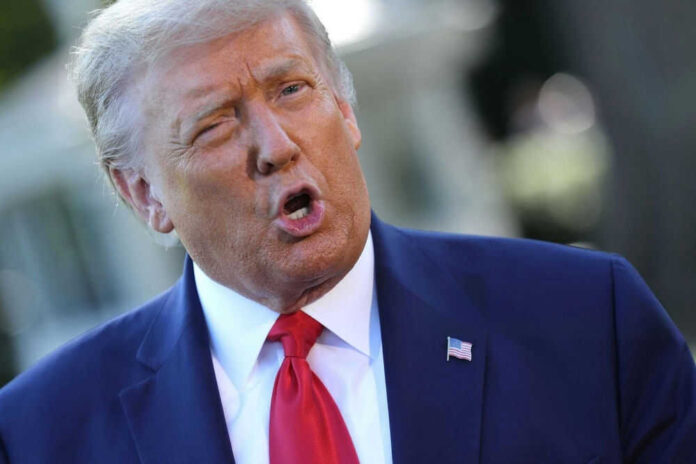
Donald Trump’s recent statement that he would invoke the Insurrection Act of 1807 if cities face deadly unrest, even if courts or governors try to block him, has reignited simmering tensions over who controls America’s streets during a crisis. Citing ongoing legal disputes in cities like Chicago and Portland, Trump made clear he sees public safety as a federal prerogative, not a local privilege. His readiness to override traditional checks and balances signals a willingness to push the outer limits of executive authority if urban violence spirals out of control.
Trump’s position is more than political bravado; it’s a direct challenge to the bedrock principles of American federalism and judicial oversight. During his 2017–2021 presidency, Trump repeatedly threatened to send federal forces into cities rocked by protests, especially during the Black Lives Matter demonstrations of 2020. Now, as legal blockades multiply and state leaders like Illinois Governor JB Pritzker threaten lawsuits to thwart federal deployments, Trump’s message is blunt: “If people were being killed, courts were holding us up, or governors or mayors were holding us up, sure, I’d do that. I want people not to be killed. We have to make sure our cities are safe.”
The Insurrection Act: History, Precedent, and Political Peril
The Insurrection Act of 1807 is a legal relic with explosive potential. Designed to let the president deploy the military domestically to quell insurrection or rebellion, it has been used sparingly, most recently in 1992, when President George H.W. Bush sent troops to Los Angeles during the Rodney King riots, and only at the explicit request of California’s governor. In the 1960s, the Act was invoked during civil rights unrest, but presidents have generally shied away from wielding such force absent state consent or overwhelming necessity. Legal experts note that using the Act over state objections would trample on the delicate balance between federal and state powers, and could send shockwaves through constitutional law and civil society.
Trump’s threats to bypass courts and local officials cut against decades of precedent and military reluctance to police Americans. The U.S. military, proud of its apolitical tradition, has long resisted domestic law enforcement roles. Legal scholars from organizations like the Brennan Center warn that a unilateral invocation of the Act would set a dangerous precedent, potentially eroding civil liberties and stoking public mistrust. The League of Women Voters and others emphasize the gravity of such a move, noting it could provoke rather than calm unrest, further polarizing an already divided nation.
Legal Standoffs and Political Fallout: What’s at Stake?
Legal battles are already raging in states like Illinois and Oregon, where courts have blocked attempts to deploy federal troops. Governor Pritzker has pledged to sue if Trump moves to send the National Guard into Chicago. Recent court rulings have sided with local autonomy, deepening the standoff between federal objectives and state resistance. Trump’s statements have left the threat of invoking the Insurrection Act hanging over city halls and courthouses nationwide, raising the specter of a constitutional crisis if violence breaks out and local leaders refuse federal help.
The political risks are immediate and severe. Deploying the military to American cities could escalate tensions, disrupt local economies, and further undermine trust between communities and government. Critics argue that such federal action would be seen by many as politically motivated, fueling accusations of authoritarian overreach. Supporters, meanwhile, insist that extraordinary times demand extraordinary measures, especially when local leaders, in their view, fail to keep citizens safe. The debate is now less about policy and more about the soul of the republic: Who decides when force is justified, and who gets to say no?
Endgame: American Federalism Tested in Real Time
As Trump doubles down on his willingness to invoke the Insurrection Act, the nation teeters between two competing visions. One side sees the president as the ultimate guardian of public order, empowered to act when lives are on the line. The other fears a slide toward unchecked executive power and the erosion of hard-won civil liberties. The courts, statehouses, and Pentagon will all play pivotal roles in the coming months. But for millions of Americans in the crosshairs of unrest, the stakes are anything but theoretical. If Trump makes good on his threats, the resulting clash could reshape not just American cities, but the very architecture of American government.
Copyright 2025, DailyVantage.com