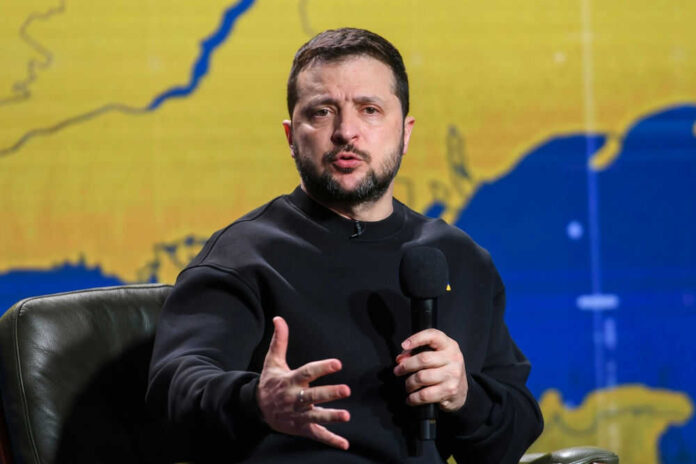
(DailyVantage.com) – Ukraine’s energy crisis deepens as Zelensky declares a state of emergency, highlighting the severe impact of Russian military strikes on civilian infrastructure.
Story Overview
- President Zelensky declares a state of emergency in Ukraine’s energy sector.
- Russian attacks have left 70% of Kyiv without power during extreme winter conditions.
- Over one million people are affected in southeastern Ukraine.
- Emergency measures include increased energy imports and warming centers.
State of Emergency Declared
On January 14, 2026, Ukrainian President Volodymyr Zelensky declared a state of emergency in the nation’s energy sector following intense Russian military strikes. These attacks, beginning January 9, targeted critical energy infrastructure, leaving 70% of Kyiv without power and plunging residents into darkness during extreme winter temperatures. The emergency declaration is a direct response to the humanitarian crisis caused by these acts of aggression, which have left residents without electricity or heating.
The situation is unprecedented, with Kyiv Mayor Vitalii Klitschko noting the severity of the damage. More than one million people in southeastern Ukraine have been affected, with energy infrastructure severely compromised. The Ukrainian government is working around the clock to restore services, deploying emergency warming centers and reviewing curfew rules to allow residents access to assistance points. Zelensky’s declaration underscores the urgency of the situation, seeking international support and coordination.
Impact of Russian Strikes
Russia’s military strategy has exploited Ukraine’s winter vulnerability, deliberately targeting civilian energy infrastructure. The strikes have not only disrupted power and heating but also strained water supplies and emergency services. The energy grid is operating at a severely reduced capacity, with repair efforts hindered by ongoing attacks. Residents face life-threatening conditions, with temperatures plummeting to -15°C to -20°C. The crisis has prompted calls for mass evacuation from Kyiv to prevent humanitarian disaster.
The energy crisis has significant economic, social, and political implications. The reconstruction of damaged facilities will require substantial international aid, while the humanitarian crisis risks exacerbating internal displacement and emigration. Strategically, the vulnerability of Ukraine’s energy sector poses long-term challenges for national security and stability. President Zelensky’s actions aim to secure international military and humanitarian support, although peace negotiations remain complicated.
International and Internal Responses
In response to the crisis, the Ukrainian government has launched several measures to mitigate the impact. Plans to increase electricity imports and establish a permanent coordination headquarters are underway. Emergency warming centers, providing warmth, device charging, and food, have been established across Kyiv. Despite these efforts, the energy crisis underscores the importance of international support to bolster Ukraine’s defenses and infrastructure resilience.
Experts highlight the structural challenges faced by Ukraine’s energy sector in light of relentless Russian attacks. DTEK, the largest private energy provider in Ukraine, is operating in a “permanent crisis mode,” struggling to repair the grid amidst ongoing strikes. This situation is not just a temporary crisis but a reflection of the broader strategic context in which civilian infrastructure is targeted as part of military tactics. The international community’s role in supporting Ukraine is crucial to navigating this complex crisis.
Sources:
Zelensky to Declare State of Emergency in Ukraine’s Energy Sector
Ukraine Declares Energy Emergency as Extreme Cold and Russian Strikes Hit Power Grid
Ukraine Declares State of Emergency in Energy Sector
Copyright 2026, DailyVantage.com