(DailyVantage.com) – Donald Trump’s unpredictable foreign policy, once merely unconventional, has now upended the world order so thoroughly that even America’s oldest allies are scrambling to hedge their bets.
Story Snapshot
- Trump’s erratic behavior on the world stage has intensified, triggering global anxiety about U.S. reliability.
- Allies are openly questioning America’s commitments and exploring new security and economic arrangements.
- Trump’s hyper-personalized leadership style disrupts traditional alliances, favoring strongmen and direct deals.
- Global surveys reveal a dramatic erosion of trust in U.S. leadership, with Trump seen as dangerous and arrogant.
Trump’s Foreign Policy: From Unconventional to Unmoored
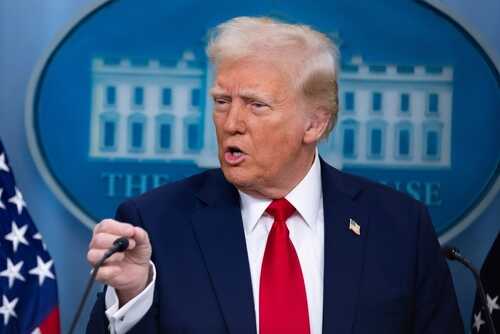
Since 2015, Donald Trump’s approach to the world has been a study in unpredictability. During his campaign and first term, he withdrew from agreements, blustered at summits, and pitted America’s interests against those of its closest partners. In 2024 and 2025, these tendencies have not only returned but escalated, with threats against NATO allies, abrupt reversals on economic policy, and public displays of erratic behavior that leave even seasoned diplomats at a loss. Allies, once confident in American leadership, now watch uneasily as Trump’s personal whims dictate global policy and U.S. commitments hang by a thread.
America’s “America First” doctrine is no longer a slogan; under Trump, it is a battering ram, upending decades of careful alliance-building. The ripple effects are global. European leaders, historically deferential to U.S. power, have begun discussing alternative security architectures. Some have quietly reached out to China, others to Russia, seeking assurances in a world where the old rules no longer apply. Trump’s willingness to browbeat partners and praise autocrats has fundamentally altered the balance of trust, leaving the international system more brittle than at any point since World War II.
The Personalization of Power and Its Global Fallout
Trump’s foreign policy is not just unconventional; it is hyper-personalized. He prefers deals made in private, leader to leader, often bypassing State Department professionals and ignoring institutional processes. Analysts at the Brookings Institution argue that this style “undermines institutional problem-solving and global cooperation,” because it replaces predictable, rule-based engagement with moment-to-moment improvisation. Trump’s affinity for strongmen, whether in Moscow, Ankara, or Pyongyang, has elevated personalities over principles, making U.S. commitments appear transactional and fleeting. Allies, once certain of America’s word, now find themselves watching Twitter feeds for clues to future U.S. policy.
This shift has created an opening for adversaries. Russia and China, skilled at exploiting uncertainty, have moved quickly to fill voids left by American retrenchment. For U.S. allies, the consequences are stark: intelligence sharing, joint military exercises, and economic agreements are all now subject to the volatility of a single man’s impulses. The result is an international system that feels less like a community of nations and more like a casino, where the house rules change without warning.
Economic Whiplash and the Decline of Dollar Dominance
Trump’s erratic policies extend far beyond the diplomatic sphere. The American Prospect’s analysis of “Trumponomics” paints a grim picture: tariffs announced and rescinded overnight, threats of sanctions against allies, and a willingness to weaponize U.S. economic might for personal or political gain. These moves have shaken global markets and led some economists to warn of a potential decline in the dollar’s dominance as the world’s reserve currency. Short-term volatility is now the norm. Allies, burned by sudden reversals, are developing parallel financial systems, seeking to insulate themselves from further shocks.
The social and political fallout within the United States is no less severe. Rising prices and supply chain instability have hit American consumers hard. The polarization that Trump has long fueled now deepens, with trust in government and national institutions at historic lows. Meanwhile, Pew Research Center’s 2025 survey reveals a dramatic drop in global confidence in U.S. leadership, with Trump widely viewed as arrogant, dangerous, and unqualified, even as some populations continue to see him as a strong leader. The net effect: America’s credibility, both at home and abroad, is eroding under the weight of its own unpredictability.
Expert Consensus: Unpredictability as a Liability, Not an Asset
Expert opinion is clear: while some defenders claim Trump’s unpredictability is a deliberate negotiating tactic, the consensus among major think tanks is that the costs far outweigh any supposed benefits. Brookings, The American Prospect, and Pew Research all highlight the dangers of bypassing established institutions in favor of personal rule. The erosion of American credibility is not just a theoretical risk but a present reality, measured in lost alliances, economic instability, and a global order increasingly defined by uncertainty and mistrust.
Some observers argue that a less predictable America keeps adversaries guessing. Yet, for allies who have staked their security and prosperity on U.S. leadership, unpredictability breeds only anxiety. The long-term implications are profound: as allies hedge their bets, the world order that America built may be giving way to a new, more chaotic era, one where the only constant is the volatility of the man at the helm.
Copyright 2025, DailyVantage.com