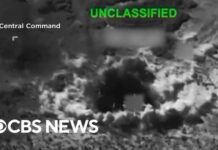
(DailyVantage.com) – The United States military has crossed a historic line by launching direct airstrikes against alleged drug traffickers in Caribbean waters, killing at least 43 people across ten separate incidents in what represents an unprecedented shift from law enforcement to lethal military engagement in the war on drugs.
Story Highlights
- US military conducted ten airstrikes since September 2025, resulting in 43 deaths and marking first direct lethal force against alleged drug traffickers
- Trump administration declared “armed conflict” with drug cartels, targeting vessels allegedly operated by Colombian ELN and Venezuelan Tren de Aragua
- Regional governments condemned strikes as extrajudicial killings, with survivors released without charges raising questions about accuracy of US claims
- Operations expanded from Caribbean to Pacific, establishing dangerous precedent for extraterritorial military action against non-state actors
From Interdiction to Armed Combat
The transformation began in late August 2025 when Trump deployed Navy warships to the Caribbean, signaling a dramatic departure from traditional counter-narcotics operations. Previous US efforts relied on coast guard interdiction, intelligence sharing, and support roles. The September 1st airstrike on a Venezuelan vessel that killed 11 people shattered decades of restraint, introducing direct military force into what had been primarily a law enforcement mission.
Trump publicly announced the first strike and released video evidence, framing the operation as necessary counter-terrorism against “narco-trafficking organizations.” This public disclosure marked another break from traditional covert operations, transforming the strikes into visible demonstrations of American military power in Latin American waters.
Escalation Without Evidence
The pace of operations intensified throughout September and October, with joint US-Dominican strikes seizing 1,000 kilograms of cocaine while killing three more individuals. The October 16th attack on a narco-submarine yielded two survivors who were subsequently repatriated and released without charges, raising uncomfortable questions about the accuracy of US intelligence and the legal justification for lethal force.
The US government has not publicized evidence supporting its claims that targeted vessels belonged to the Colombian National Liberation Army or Venezuelan Tren de Aragua. Both organizations have denied involvement, while Colombian and Venezuelan officials condemned the strikes as violations of international law. The lack of transparent evidence and the release of survivors without prosecution undermines the administration’s narrative of precision targeting against confirmed terrorists.
Regional Backlash and Sovereignty Concerns
Latin American governments responded with growing alarm as operations expanded beyond the Caribbean into Pacific waters. Colombia’s president publicly criticized the strikes, while Venezuelan officials accused the US of using counter-narcotics as a pretext for regime change efforts against the Maduro government. The Dominican Republic’s participation in joint operations highlighted the region’s conflicted response, balancing cooperation with concerns about American overreach.
Legal experts questioned the administration’s October 1st declaration of “non-international armed conflict” with drug cartels, arguing that such classifications require clear legal standards that have not been met. The precedent of unilateral military strikes against alleged criminals in international waters threatens established norms of sovereignty and due process that have governed inter-American relations for decades.
Strategic Implications and Future Risks
The military escalation reflects broader Trump administration priorities of projecting strength and disrupting what officials describe as narco-terrorism networks. However, the strategic effectiveness remains questionable given the adaptability of drug trafficking organizations and the limited impact of previous military interventions on drug supply chains. The strikes may satisfy domestic political demands for tough action while creating new diplomatic complications across Latin America.
The normalization of lethal military force against suspected criminals sets a dangerous precedent that other nations could exploit to justify their own extraterritorial operations. The lack of congressional oversight and transparent legal frameworks compounds these risks, potentially eroding international law constraints that have prevented similar escalations by other military powers. Common sense suggests that sustainable counter-narcotics efforts require regional cooperation and legal institutions, not unilateral military strikes that alienate potential partners while raising fundamental questions about due process and proportional response.
Copyright 2025, DailyVantage.com