(DailyVantage.com) – As President Trump’s strikes on Iran expand, Washington is now debating how far America should go—overseas and at home—to stop a hostile regime without letting security fears morph into open-ended government power.
Quick Take
- Rep. Andy Ogles (R-Tenn.) is publicly defending the February 28 U.S.-Israeli strike campaign on Iran as a “strength” response to nuclear and regional threats.
- Iran retaliated with missile attacks aimed at Israel and at U.S. bases in the Middle East, underscoring the immediate risk to American service members.
- Reporting describes a fast-moving battlefield with conflicting claims, including unverified reports of some naval-related strikes.
- Ogles is also linking the Iran conflict to domestic security policy, including a proposed immigration restriction targeting adversarial countries.
What the February 28 strike campaign targeted—and why it matters
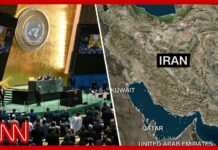
U.S. and Israeli forces launched a strike campaign on February 28, 2026, aimed at degrading Iran’s military infrastructure, leadership targets, and its nuclear and missile programs. Public reporting describes a broad target set, including sites connected to air defense, missile capabilities, and regime nodes. The operational picture remains fluid, with analysts warning that early public information can be wrong and is still being refined as new intelligence emerges.
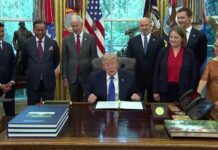
President Trump announced the strikes in a message that framed the operation around protecting the Iranian people from the regime while pressing for major political change. That posture signals a larger objective than a single retaliatory raid: disrupting Iran’s ability to threaten U.S. forces and allies, while also pressuring the leadership structure that drives Iran’s regional aggression. The practical question is whether Iran’s retaliatory capacity can be reduced fast enough to prevent further escalation.
Iran’s retaliation highlights the danger to U.S. troops and allies
Iran responded after the opening strikes with missile attacks directed at Israel and at U.S. installations across the Middle East. Reporting cited a broader tally of missiles fired at Israel while also describing smaller barrages in individual waves, reflecting the fog of war and the pace of events. What is not disputed is the strategic message: Iran can still reach American bases and Israeli population centers, even while under sustained pressure.
Analysts tracking the campaign also pointed to uncertainty around some claims, including reports involving naval assets and specific bases that were not yet verified. That caution is important for Americans trying to separate confirmed developments from online rumor. It also matters for evaluating policy: decisions about further strikes, force posture, and homeland security should be based on verified facts rather than viral narratives that can inflame public opinion and distort the constitutional balance at home.
Ogles’ “strength” argument—and the domestic policy collision it creates
Rep. Andy Ogles has defended the strikes as an example of leading through strength, and he is tying the external conflict to internal security choices. In public discussion of the Iran threat environment, Ogles has highlighted concerns ranging from hostile-state activity to broader ideological dangers, and he has pointed to prior legal precedent upholding a Trump-era travel restriction. His posture reflects a wider Republican view that deterrence fails when America signals weakness.
Ogles’ approach also raises a second, unavoidable debate: immigration policy in an era of adversarial-state confrontation. Separate reporting describes a push to restrict immigration from a list of countries described as adversaries or high-risk, in the wake of an investigation into a Texas shooting that, in the reporting, referenced Iranian and Islamic imagery tied to the suspect. The strength of that argument depends on public evidence and due process, not generalized suspicion of lawful immigrants.
Cyber, security, and the constitutional line Americans should watch
Beyond missiles and airstrikes, Ogles has also stressed the reality of cyber conflict and has convened discussion on coordinating American cyber offensive efforts. That emphasis fits the modern battlefield, where adversaries can disrupt infrastructure, information systems, and military logistics without firing a shot. For conservatives who remember years of bureaucratic overreach sold as “safety,” the key is insisting that any expanded cyber posture remains bounded by law, oversight, and constitutional limits.
The Iran operation is unfolding in real time, and some key details—including the full effects on Iran’s leadership and the extent of damage to certain capabilities—have been reported with varying confidence levels. The most solid takeaway is straightforward: the Trump administration is signaling a return to hard deterrence abroad while Republicans in Congress debate tougher controls at home. Voters should demand clarity, verified facts, and policies that defend Americans without normalizing indefinite emergency government.
Sources:
Iran Update Special Report: U.S. and Israeli Strikes (February 28, 2026)
Chairman Ogles Holds Hearing to Coordinate American Cyber Offensive
MAGA hardliner pushes ban on immigration from Islamic countries, adversaries after Texas shooting
Copyright 2026, DailyVantage.com