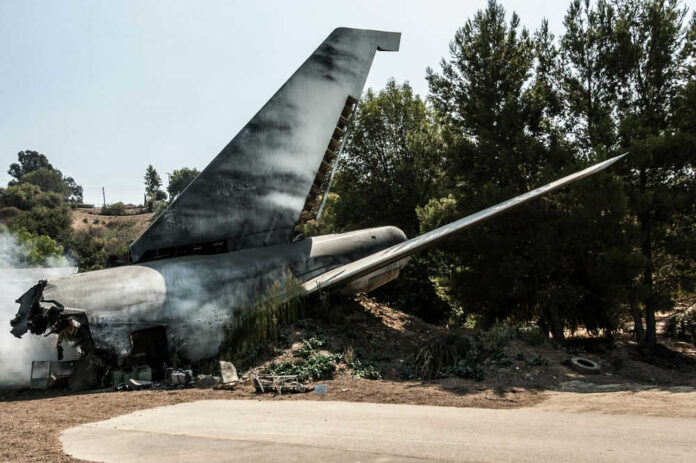
(DailyVantage.com) – The skies above Washington, D.C., were forever changed on January 29, 2025, in one of the most catastrophic midair collisions in recent history.
Story Overview
- A fatal collision between an American Airlines jet and a U.S. Army Black Hawk helicopter.
- 67 lives lost, igniting debates over aviation safety protocols.
- High-profile investigation led by the NTSB reveals shocking findings.
- Public demands for reforms and accountability in mixed-use airspace.
Collision at Washington Reagan
On a seemingly ordinary day, American Airlines Flight 5342 and a U.S. Army Black Hawk helicopter collided in the skies near Washington Reagan National Airport. The violent encounter led to a devastating crash that obliterated both aircraft. The catastrophe resulted in the loss of 67 lives, leaving only the tail and wing remnants of the once majestic jet. The incident has thrust aviation safety protocols into the spotlight and raised questions about the management of shared airspace.
The collision marked a tragic day in aviation history, with immediate emergency responses and investigations following the disaster. The National Transportation Safety Board (NTSB) launched a full-scale examination to uncover the reasons behind the catastrophe. Their findings, released in August 2025, included chilling surveillance footage and animation of the crash, highlighting the severe human and operational failures involved.
Background and Complications
Washington Reagan National Airport’s complex airspace is notorious for its challenges, shared by both civilian and military aircraft. The collision reignited concerns about the risks tied to mixed-use airspace. Recent increases in military training flights have exacerbated the potential for conflicts, especially with reported altimeter discrepancies in the Black Hawk helicopters. These helicopters have shown consistent errors during test flights, which poses a significant safety risk.
Calls for upgrading the older UH-60L Black Hawk models to the newer UH-60M standards have been persistent. This incident has amplified those demands, emphasizing the urgent need for better coordination between civilian and military air traffic controllers to prevent such tragedies in the future.
Stakeholders and Their Roles
The aftermath of the collision has seen various stakeholders grappling with the consequences and responsibilities. American Airlines, responsible for the safety of its passengers, and the U.S. Army, which operates the Black Hawk helicopter, find themselves at the center of this crisis. The NTSB, tasked with investigating the incident, has released critical findings, including footage that underscores the extent of the incident’s devastation.
The Federal Aviation Administration (FAA) is under intense scrutiny to improve airspace management and ensure aviation safety standards are upheld. Meanwhile, the families of the victims are seeking accountability and support, as they cope with the aftermath of this tragedy.
Current Developments and Investigations
The NTSB’s release of new surveillance footage on August 2, 2025, has provided a clearer picture of the crash sequence. Evidence confirms altimeter errors in the Black Hawk helicopters, which were already under suspicion due to prior discrepancies. Tensions have flared during NTSB hearings, with FAA and military officials facing tough questions regarding their roles and responsibilities.
1 dead, 3 injured after pair of planes collide midair while landing at Colorado airport pic.twitter.com/XNcOKQnwKo
— DaviD (@trutherbotchief) September 1, 2025
Both the FAA and the Army have issued joint statements, pledging cooperation in the ongoing investigation. The focus remains on identifying equipment malfunctions and improving air traffic control procedures to prevent future tragedies. The families of the victims continue to demand answers and support as the investigation unfolds.
Copyright 2025, DailyVantage.com.