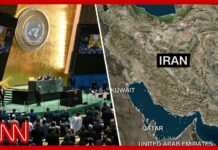
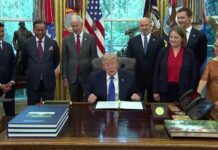
After nearly two weeks of nightly U.S. airstrikes on Iran, both countries have suddenly gone quiet — raising hopes for diplomacy while reminding Americans how war and peace now hinge on decisions made far from public view.
Story Snapshot
- The United States has paused attacks on Iran for a second straight day, and Tehran says it has halted its own strikes in response.
- Officials link the pause to renewed efforts to rescue a fragile interim ceasefire and restart talks over the Strait of Hormuz and Iran’s nuclear program.
- President Trump is framing the pause as a way to “allow more time for diplomacy,” but he insists U.S. military options remain on the table.
- Americans across the political spectrum see a familiar pattern: short pauses, secret talks, and a powerful security establishment deciding the course of war with little real accountability.
Mutual Pause After 13 Nights of Strikes
United States forces stopped bombing Iran late Friday after 13 straight nights of airstrikes, marking the first break in the campaign since it began. The Pentagon reported no new attacks on Saturday or Sunday. Iran, which had been firing missiles and drones at U.S. bases in nearby countries after each American strike, also held its fire for two nights. An Iranian army spokesperson told state television that because U.S. attacks had stopped, Tehran had paused what it called “retaliatory” operations.
Associated Press reporting says both governments confirmed the pause while mediators worked to repair an interim ceasefire badly damaged by recent clashes. That ceasefire was part of a wider attempt to end the war and keep the Strait of Hormuz open to global shipping. The Strait is a key artery for world oil supplies, so even short-term pauses in fighting can move energy prices and deepen public worries about how foreign policy affects household costs and economic stability.
Diplomacy Tied to a Fragile Ceasefire
A senior U.S. official told reporters that Washington and Tehran agreed to halt attacks and resume “technical talks” meant to save the interim peace deal and address disputes over shipping lanes and Iran’s nuclear program. Axios reported that both sides decided to “stop all kinetic activity” and planned to meet in Doha, Qatar, to work through the Hormuz dispute. Iran, however, told its own media it had not agreed to meet U.S. officials “at any level,” underscoring how fragile and confusing the diplomatic track remains.
President Trump has repeatedly used limited pauses in bombing as leverage in talks. Earlier this year he suspended assaults on Iran’s energy facilities for ten days at Tehran’s request, claiming negotiations were going “exceptionally well.” He later extended that energy-strike pause again, saying discussions were continuing and that he saw “positive” progress. At other points, he has threatened a “much higher level” of attacks if Iran does not accept U.S. conditions, blending openings for diplomacy with stark warnings of escalation.
What Each Side Says It Wants
The Trump administration says the goal is a “complete and total resolution” of hostilities, including limits on Iran’s nuclear and missile programs and firm rules on ship traffic through Hormuz. Reports describe a U.S. “action list” with demands ranging from dismantling nuclear facilities to effectively handing the Strait’s control to arrangements backed by Washington and its allies. Iranian officials publicly call these terms “biased and unjust,” and state media often questions whether the United States is serious about a fair deal.
Iran’s leaders tie their own pause directly to U.S. behavior. Reuters quotes a senior Iranian official saying Iran will halt attacks “as long as” Washington keeps its bombing pause. Iranian spokespeople describe their strikes as retaliation for U.S. actions and insist they will resume if American attacks start again. At the same time, Tehran has used talks with other countries, such as Oman and Qatar, to push its position on Hormuz and to show it has options beyond dealing with Washington alone.
Why Many Americans Feel Shut Out
For many Americans, the pattern around this pause feeds a deeper frustration: decisions about war, peace, and energy prices appear driven by a small circle of political leaders, generals, and foreign negotiators, not by the people living with the consequences. Much of the public information comes from anonymous officials, secret “technical talks,” and changing ceasefire terms rather than clear agreements voters can see and judge. Both conservatives and liberals worry that these structures let the national security establishment act with little real oversight.
US-Iran direct strikes are paused. Red Sea risk is not.
After 13 consecutive nights of U.S. strikes, both sides have held fire for a second day.
Iran says it will maintain the pause as long as the U.S. does.
Mediators are trying to create space for talks.
This is a tactical pause… pic.twitter.com/5g3FzTAioi— Global Skyeye (@GlobalSkyeye) July 27, 2026
Older conservatives see the U.S.–Iran conflict through years of global entanglements, rising energy costs, and what they view as failed “globalist” strategies that never put Americans first. Older liberals see another example of military power used while social needs at home go unmet and inequality grows. Both groups increasingly share one belief: the federal government serves powerful elites before ordinary citizens. Short pauses in bombing, announced from Washington and Tehran, may temporarily reduce the risk of wider war. But they also highlight how far big decisions about life and death have moved from public hands, and how easily a fragile truce can give way to another round of strikes if secret talks falter.
Sources:
military.com, yahoo.com, reuters.com, theguardian.com, english.ahram.org.eg, bostonglobe.com, youtube.com, aljazeera.com, cnbc.com, thehill.com, dw.com
© dailyvantage.com 2026. All rights reserved.