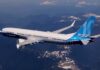
China just solved the engine problem that had kept its biggest military transport jet dependent on Russia — and now it can build as many as it wants.
At a Glance
- China’s upgraded Y-20B transport aircraft now runs entirely on homemade WS-20 engines, cutting its last major tie to Russian military hardware.
- The Y-20B can carry up to 66–70 tons of cargo, putting it among the most capable heavy transport jets being built anywhere in the world today.
- With domestic engine production in place, China can now build Y-20B aircraft without limits — a major shift in its military air power.
- Every engine, electronic part, and line of software code in the Y-20B is made in China, marking a full break from foreign technology dependence.
China’s Big Engine Problem — Now Solved
For years, China’s Y-20 heavy transport aircraft had a serious weak point: its engines came from Russia. The original Y-20A used Russian D-30KP-2 engines, which limited how many planes China could build and how far they could fly. That dependency gave Russia quiet leverage over China’s military air power. The new Y-20B changes that completely. It runs on four domestically built WS-20 high-bypass turbofan engines, ending China’s reliance on foreign engine suppliers.
The WS-20 engine took more than 20 years to develop. That long road included failed timelines, technical setbacks, and years of flight testing. But the engine is now in service. It produces about 31,000 pounds of thrust per unit and burns fuel more efficiently than the Russian engines it replaced. The result is a transport jet with longer range, more cargo capacity, and far greater production potential. U.S. defense analysts at The War Zone noted that mass production of the WS-20 means China can now manufacture Y-20B aircraft in unlimited numbers.
What the Y-20B Can Actually Do
The Y-20B entered service in 2024 and has already been used in real-world missions. One recent flight carried the remains of Chinese soldiers home from South Korea — a high-profile, symbolic operation. In terms of raw performance, the aircraft can haul up to 66 to 70 tons of cargo. That payload puts it in the same league as the largest transport jets operating anywhere on Earth. With better fuel efficiency, it can cover longer distances without stopping — a key factor in projecting military power far from home.
The aircraft also serves as the base platform for other variants. China’s People’s Liberation Army Air Force already operates the YY-20A, an aerial refueling tanker built from the Y-20 airframe. As Y-20B production ramps up, analysts expect the tanker fleet to grow quickly alongside it. A larger tanker fleet means Chinese fighter jets and bombers can fly farther and stay in the air longer — a meaningful upgrade to overall military reach.
Full Domestic Production — A Milestone Worth Watching
What makes the Y-20B stand out beyond its engine is the claim of total self-sufficiency. Yang Shushuai, an airborne mechanic from the first military unit to receive the new variant, stated plainly: “The Y-20B has achieved full domestic production. The WS-20 engine is fully independently designed and manufactured. The electronic components are all domestically produced.” If accurate, that means no foreign part — no chip, no software, no engine component — can be used as a pressure point against China’s military aviation program.
China has unveiled new footage showcasing the full Y-20 transport aircraft family, including the Y-20A, Y-20B, and YU-20 tanker. The video also highlights the YU-20 refueling an H-6N bomber in mid-air, demonstrating China's expanding long-range operational capability.
Powered by… pic.twitter.com/9oN1Y1s1HG
— Srijan Pal Singh (@srijanpalsingh) July 2, 2026
China is now one of only five countries — alongside the United States, Britain, France, and Russia — to independently develop high-performance high-bypass turbofan engines. That is a short list. The American C-17 Globemaster, the West’s gold-standard heavy transport, stopped production in 2015 and has no direct replacement currently being built at scale. China, by contrast, appears to be expanding Y-20B production right now. For American defense planners, that gap in production momentum is the kind of detail that tends to show up later as a strategic problem.
Sources:
19fortyfive.com, globaltimes.cn, youtube.com, globalsecurity.org, chinadaily.com.cn, militarywatchmagazine.com, reddit.com
© dailyvantage.com 2026. All rights reserved.