The U.S. military has struck more than 80 Iranian targets and reimposed oil sanctions after Iran attacked commercial ships in the Strait of Hormuz — blowing up a ceasefire that both sides now blame the other for breaking.
Story Snapshot
- Iran struck at least three commercial vessels in the Strait of Hormuz, triggering a massive U.S. military response targeting air defenses, command centers, radar sites, and Iranian small boats.
- President Trump declared the ceasefire agreement “finished” and called Iran’s attack on a Singapore-flagged cargo ship a “foolish violation” of the deal.
- The U.S. hit more than 80 Iranian targets and reimposed sanctions on Iranian oil exports as punishment for the attacks on commercial shipping.
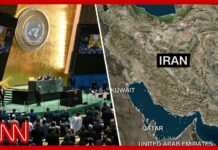
- Iran fired back with ballistic missiles at U.S. military bases in Kuwait, Bahrain, Qatar, and Jordan — and both sides accuse the other of firing first.
How the Ceasefire Fell Apart
A ceasefire between the U.S. and Iran collapsed in late June 2026 after Iran struck commercial ships in the Strait of Hormuz. U.S. Central Command called the attacks “unwarranted, dangerous, and a clear violation of the ceasefire.” President Trump declared the agreement over and said Iran’s drone strike on a Singapore-flagged cargo ship was a “foolish violation.” North Atlantic Treaty Organization (NATO) Secretary-General Mark Rutte backed the U.S. position, calling American strikes “absolutely necessary.”
Iran tells a different story. Iranian officials cited specific articles of the ceasefire agreement they say the U.S. broke first. Iran’s deputy foreign minister named Articles 1, 2, and 10 as violated by American actions. Iranian state media also reported explosions near the Bushehr nuclear power plant and southern ports — damage that U.S. officials denied causing. That contradiction left a credibility gap that neither side has fully closed with public evidence.
What the U.S. Military Did
U.S. forces struck more than 80 targets inside Iran. Those targets included air defense systems, command centers, radar stations, and more than 60 Islamic Revolutionary Guard Corps small boats. The military also hit Iranian missile and drone storage sites along the coast. On top of the military strikes, the Trump administration reimposed sanctions on Iranian oil exports — a direct economic blow aimed at cutting off one of Tehran’s main sources of income.
Iran responded with force. Tehran admitted firing 10 ballistic missiles at a U.S. airbase in Jordan. Iranian forces also struck U.S. military installations in Kuwait, Bahrain, and Qatar. Iranian state media claimed strikes on railway bridges inside Iran as well. The exchange marked what multiple outlets described as the most intense round of direct U.S.-Iran fighting in the current conflict.
The Strait of Hormuz and Why It Matters
The Strait of Hormuz carries roughly 20 percent of the world’s oil supply. Iran has used the waterway as a pressure point against the West for decades — threatening or executing disruptions whenever it faces economic or military pressure. The current crisis follows a pattern going back to the 1979 Iranian Revolution, with each side accusing the other of breaking agreements and international law. Neither the U.S. nor Iran is a party to the main international treaty governing sea lanes, which adds legal ambiguity to every confrontation there.
oman's🇴🇲 role in this war has gone through four different phases in under a month, and tonight it flipped again.
mid-june: oman was just a location. a tanker gets hit near its coast, ships start rerouting through its waters as an alternate lane. no warships, no diplomacy. our… pic.twitter.com/ismOPaAfvk
— Sozu (private beta) (@Sozuposting) July 10, 2026
Oil prices surged to between $90 and $95 per barrel as the fighting intensified — a direct hit to American consumers already frustrated by years of high energy costs. For people on both the left and the right who feel the government puts global politics ahead of kitchen-table concerns, watching oil prices spike while U.S. forces trade blows with Iran in a distant waterway raises a familiar and uncomfortable question: who is actually paying the price for these decisions, and who is making them?
Sources:
gatewayhispanic.com, thehill.com, bbc.com, facebook.com, youtube.com, aljazeera.com
© dailyvantage.com 2026. All rights reserved.