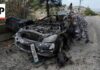
As Iran and the United States trade deadly blows across the Middle East, two fallen American troops in Jordan are fast becoming symbols of a war many voters feel Washington’s elites let spin out of control.
Story Snapshot
- Two U.S. service members were killed and one is missing after Iranian missile and drone strikes on a U.S. base in Jordan.
- The attack came after at least seven straight nights of U.S. strikes inside Iran and across the Gulf region.
- Iran’s supreme leader and top commanders say U.S. bases in other countries are now “fair game,” pulling allies into the line of fire.
- Both sides claim self‑defense, while ordinary Americans see another distant war driven by power, oil routes, and political careers.
What Happened In Jordan — And Why It Matters
U.S. Central Command said two American service members were killed and one remains missing after Iranian ballistic missiles and drones hit a U.S. base in Jordan on July 17. The base, widely reported as an air facility used for operations across the region, came under fire as Iran widened its response to U.S. strikes linked to clashes over the Strait of Hormuz. For families back home, the basic fact is simple and painful: more Americans are dying in a war they did not vote on directly.
Iran’s Revolutionary Guard said it fired twelve ballistic missiles at what it called a U.S. “command center” in Jordan, claiming to have destroyed facilities and even fighter jets. The United States has not confirmed any destroyed aircraft, so that part of the story remains Iran’s claim, not an agreed fact. This kind of gap is common in wartime: each side releases what helps its own narrative, while citizens are left to sort out truth from propaganda with limited information.
How The Fight Escalated Across The Region
The strike in Jordan did not come out of nowhere. U.S. forces had already carried out at least seven straight nights of airstrikes on Iran, hitting surveillance sites, logistics hubs, underground weapons storage, and maritime targets, according to Central Command. U.S. officials said some of these attacks were a response to earlier Iranian actions against commercial ships near the Strait of Hormuz, a key route for global oil and gas. In simple terms, Washington says it is trying to keep trade lanes open and stop Iran’s military build‑up.
Tehran tells a different story. Iranian leaders say the United States violated an interim Memorandum of Understanding meant to cool tensions, then struck targets inside Iran and near sensitive sites such as a children’s cancer hospital. Iranian commanders argue they are now hitting U.S. bases in Jordan, Kuwait, Bahrain, and other Gulf states because those bases are used to launch attacks on Iran. From their view, countries hosting American forces cannot stay neutral once their runways and ports support U.S. strikes.
Missiles, Drones, And A Spreading Battlefield
Central Command said U.S. forces and partners intercepted more than eighty Iranian attack drones and at least six ballistic missiles aimed at regional allies in one large wave, underscoring how wide and high‑tech the fight has become. Iran, for its part, says it has hit eighteen “important” American military sites in Kuwait and Bahrain with missiles in retaliation for U.S. strikes in southern Iran. That means American troops are exposed not just in one base in Jordan but across a chain of facilities in small, vulnerable states.
Iran also abandoned the earlier Memorandum of Understanding and expanded attacks to power plants, desalination facilities, and other infrastructure in Saudi Arabia, Kuwait, Bahrain, Jordan, and Qatar, according to regional reporting. Those facilities keep lights on and water flowing for millions of ordinary people, not just politicians and generals. When those systems are hit, it is regular families — in Arab states and in Iran — who pay the price, while leaders trade blame on television and social media.
Supreme Leader’s Warning And The Deepening Trust Gap
Iran’s new supreme leader has used fiery language, calling the United States the “Great Satan” and accusing Washington of dishonesty, broken promises, and cowardice, saying America’s signature on any deal “has no value.” That message is aimed at both Iranians and the wider region: Tehran wants to paint U.S. leaders as unreliable powers who will strike, sanction, and walk away from agreements whenever it suits them. Many Americans across the political spectrum, tired of shifting red lines and half‑explained wars since 9/11, may quietly agree that Washington’s word has been stretched thin.
CENTCOM: 2 US service members killed, 1 missing after Iranian missile/drone strikes hit a US base in Jordan
First American combat deaths in this conflict since March. Night 7 of consecutive US-Iran strikes.
Strait of Hormuz tanker transits down over 50% week-on-week. pic.twitter.com/LlGjcAuNFP
— wintel.site (@wintelsite) July 19, 2026
Back in the United States, frustration runs through both left and right, even if they blame different parties. Conservatives see another costly foreign fight while the border feels broken and debt soars. Liberals see more Pentagon spending and more risk for troops while health care, housing, and wages lag at home. What both sides share is a sense that decisions about war and peace are made by a small circle of elites — presidents, generals, lobbyists, and defense contractors — far from the families who send their sons and daughters to bases like the one in Jordan.
Rising Casualties And A War Without A Clear Off‑Ramp
Reports now put total U.S. deaths in this conflict in the double digits, with hundreds wounded, as strikes and counter‑strikes spread from Iran itself to bases and infrastructure in Kuwait, Bahrain, Jordan, and beyond. Iran and the United States both insist they are acting in self‑defense under international law, each pointing to the other’s broken commitments and earlier attacks as proof. For everyday Americans, that legal back‑and‑forth does not answer the basic questions: What is the end goal, who is held accountable if things go wrong, and how many more names will be added to casualty lists before Washington finally changes course?
Sources:
independent.co.uk, mediaite.com, en.wikipedia.org, nbcnews.com, townhall.com, thestandard.com.hk, reuters.com, thehill.com
© dailyvantage.com 2026. All rights reserved.