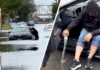
A 28-year-old Mexican man died after running from federal agents into a busy Florida roadway, where a tractor-trailer struck him, underscoring how enforcement encounters can turn deadly in seconds.
Story Snapshot
- Florida Highway Patrol says the man fled an Immigration and Customs Enforcement encounter and was hit on State Road 16.
- The encounter happened near a Wawa store before 7 a.m., and the crash was reported at 6:42 a.m..
- This marks another fatality linked to recent immigration enforcement actions reported this week.
- Vehicle-related deaths are a leading cause in immigration enforcement incidents nationwide.
What Happened In St. Augustine
Florida Highway Patrol said federal agents with Immigration and Customs Enforcement and Homeland Security Investigations approached a vehicle at a Wawa on State Road 16 early Tuesday. Four people ran from the encounter on foot, according to a Florida Highway Patrol spokesperson. A 28-year-old Mexican national entered the roadway and was struck by a tractor-trailer. He died at the scene, authorities said. The crash was reported at 6:42 a.m. near Green Acres Road in St. Johns County.
Local news reported the agents’ response to the Wawa before 7 a.m., aligning with the crash time given by the Florida Highway Patrol. Reporters also noted this was the third death tied to federal immigration actions in a week across the country. Authorities have not released the man’s name. Officials have not said whether the agents were in active pursuit in the moments before impact or how far the man ran.
How Officials Describe The Enforcement Encounter
Reports from Florida Highway Patrol describe the event as an “encounter” rather than a raid or warrant service. The agency says four people fled when agents engaged them, which suggests evasion rather than a planned arrest on site. Immigration and Customs Enforcement conducts arrests away from the border as part of its mission to enforce immigration laws and remove some noncitizens under federal court orders or criminal warrants. Officials did not provide details on why agents approached this specific vehicle.
Law enforcement often urges bystanders and those involved to stay calm and avoid running during police or immigration encounters. National rights groups advise people to keep hands visible, not flee, and ask if they are free to leave before moving away. Running into traffic is especially dangerous and can be fatal, even when officers are not using force. The Florida crash shows how fast a routine stop can become a life-threatening situation when fear and flight take over.
Why These Deaths Keep Happening
Across the United States since 2010, the most common causes of deaths tied to immigration enforcement have been vehicle crashes and medical emergencies. Shootings account for fewer cases. That pattern shapes many disputes after deadly encounters. Agencies often cite evasion as the trigger, while critics argue that tactics or settings increased the risk. Both things can be true at once: flight is dangerous, and high-risk stops near fast traffic add danger for everyone nearby.
A 28-year-old man has died after being hit by a tractor-trailer while fleeing “an encounter” with ICE agents in Florida, officials say.
This is the second ICE-related fatality this week and the third since a small-business owner was killed in Houston on July 7.…
— NBC News (@NBCNews) July 15, 2026
Road safety research shows many crash victims die at the scene or on the way to a hospital. Large trucks pose special risks because of size, speed, and braking distance. A person running across a highway has little protection and almost no room for error. When an encounter moves from a parking lot to a live lane, the danger rises at once. The St. Augustine case tracks with those base rates and helps explain why these incidents can end so badly.
What This Means For Communities And Policy
Florida has ramped up coordination between local sheriff offices and federal immigration agents, which has led to more street-level encounters. More encounters can mean more flight, which can raise crash risk near roads, stores, and neighborhoods. Leaders who support tough enforcement argue these actions protect public safety. Advocates for immigrants warn that fear-driven chases make communities less safe and can end lives over status offenses rather than violent crime.
People across the political spectrum worry that government systems are failing to balance safety, dignity, and the rule of law. Families want fair laws enforced without turning parking lots into danger zones. Officers want clear rules that reduce risk during stops. Communities want transparency when deaths occur and lessons that prevent repeats. That means better planning of where and how arrests happen, and clearer guidance that reduces the chance of panic and flight during contact.
What To Watch Next
Investigators will review video, witness statements, and agency reports to confirm the sequence of events. Key questions include whether agents used sirens or commands that may have startled the group, how traffic was moving at the time, and how far the man ran before entering the roadway. Officials may also assess local policies on making stops near high-speed roads and whether extra safety steps, like blocking lanes, could lower risk in future encounters.
For residents, the safest move during any law enforcement contact is to stay put, keep hands visible, and ask if you are free to leave. If you are a bystander, you can record officers in public from a safe distance without blocking them. These steps can lower risk in tense moments while still protecting rights. None of this brings back a lost life, but it can help prevent the next tragedy on a busy morning commute.
Sources:
abc11.com, facebook.com, floridatoday.com, ilabacalaw.com, immigrantjustice.org, usafacts.org, theweek.com
© dailyvantage.com 2026. All rights reserved.