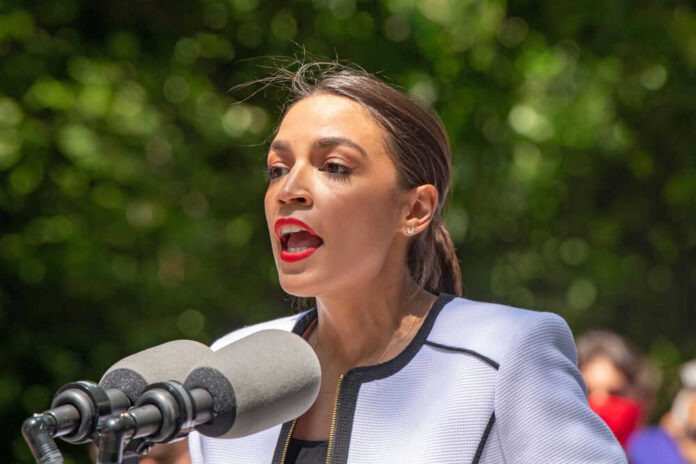
(DailyVantage.com) – Alexandria Ocasio-Cortez is poised to turn the tables on Democratic leadership, and the stakes are higher than ever.
Story Highlights
- AOC targets Democratic establishment post-shutdown deal.
- Progressive dissatisfaction with Schumer’s leadership grows.
- Intra-party conflict escalates within the Democratic Party.
- Potential shifts in party strategy and leadership loom.
A Progressive Challenge Emerges
Representative Alexandria Ocasio-Cortez has emerged as a formidable force challenging the Democratic establishment following a controversial government shutdown deal. Her criticism of Senate Majority Leader Chuck Schumer underscores a burgeoning divide within the party. As the shutdown concluded, AOC and fellow progressives expressed dissatisfaction with the terms, signaling a readiness to confront party centrists. AOC’s stance highlights the growing influence of progressive Democrats determined to steer the party further leftward, creating ripples within the political landscape.
The government shutdown of 2025 ended after a deal was reached, yet it left a bitter aftertaste among progressives. While industry groups and unions called for swift resolutions, AOC’s voice rose above, challenging the compromises made by party leadership. This intra-party conflict is not just about budget disagreements but reflects deeper ideological battles over party priorities. The progressives, led by AOC, demand more aggressive reforms, especially in social programs, a stance that increasingly pits them against centrist Democrats.
Democratic Leadership Under Pressure
Senator Chuck Schumer’s leadership faces intensified scrutiny as progressives press for change. The shutdown deal, seen by many as a centrist compromise, has fueled calls for accountability. AOC’s criticism isn’t just directed at Schumer but also serves as a broader challenge to the Democratic Party’s traditional leadership. This internal discord reflects the party’s struggle to balance its diverse factions, with progressives demanding a more assertive approach to policy and governance.
Amid this backdrop, the Democratic Party’s internal dynamics are shifting. The influence of younger, progressive voices is growing, challenging the status quo and pushing for leadership changes. As AOC continues to rally support, the question remains: can the Democratic Party unify under such pressure, or will these divisions lead to a significant realignment? The stakes are high, and the outcome could reshape the party’s future trajectory.
Implications for the Future
The recent shutdown and subsequent deal have lasting implications for both the Democratic Party and the broader political landscape. Economically, the shutdown disrupted federal services, costing billions and affecting countless workers. Politically, it has exposed vulnerabilities within Democratic leadership, with progressives gaining momentum. The introduction of legislative measures like the Government Shutdown Prevention Act of 2025 reflects a bipartisan effort to prevent similar crises, but the underlying tensions within the Democratic Party remain unresolved.
The broader impact of this intra-party conflict extends beyond immediate policy debates. It raises questions about the Democratic Party’s ability to adapt to changing political dynamics and meet the demands of its diverse constituencies. As AOC and her allies continue to challenge the establishment, the party faces a critical juncture. Will it embrace this progressive surge, or will it struggle to reconcile its internal differences? The answers will shape not only the party’s future but also the political landscape in the years to come.
Copyright 2025, DailyVantage.com .