(DailyVantage.com) – Trump’s unexpected FEMA funding announcement leaves states relieved but raises questions about long-term disaster management strategies.
At a Glance
- Trump approves FEMA funding for Indiana, Michigan, Kentucky, and West Virginia.
- Policy shift follows earlier threats to phase out FEMA.
- Severe weather events in 2025 have intensified the federal vs. state disaster management debate.
- Experts caution against reducing FEMA’s role without robust state preparedness.
Trump’s FEMA Funding Announcement
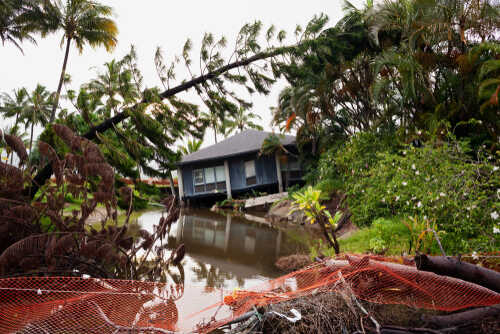
President Donald Trump has thrown a curveball in the ongoing debate over disaster management by unlocking Federal Emergency Management Agency (FEMA) funding for four storm-stricken states. Indiana, Michigan, Kentucky, and West Virginia will collectively receive millions to help recover from devastating tornadoes, ice storms, and floods. This move comes as a surprise given Trump’s prior rhetoric about curtailing FEMA’s role, advocating instead for state-led disaster response with minimal federal involvement.
Trump’s administration had faced criticism earlier this year for its handling of the Texas floods, which claimed over 130 lives. Observers have noted a marked shift in tone, with the president now emphasizing FEMA’s role as a financial backer rather than its complete elimination. Governors in the affected states have expressed gratitude for the federal aid, though some have pointed out delays in the funding process.
Severe Weather and Federal Aid
The U.S. has been battered by severe weather events throughout 2025, with the Midwest and South experiencing particularly harsh conditions. Tornadoes and ice storms wreaked havoc in Indiana and Michigan in March, while Kentucky faced deadly floods and tornadoes in April and May. By June, West Virginia was grappling with heavy rains and flooding. These disasters have reignited the debate over federal versus state responsibility in disaster management, with Trump advocating for a rebalance that places more emphasis on state responsibility.
Federal funds are now flowing into these states, with $15.1 million earmarked for Indiana, $56 million for Kentucky, and $11.7 million for West Virginia. FEMA is coordinating recovery efforts with state and local authorities, ensuring that the aid reaches those who need it most. This infusion of federal cash is crucial for stabilizing local economies, rebuilding infrastructure, and providing temporary housing for displaced residents.
Political and Policy Implications
Trump’s recent actions have significant political implications, providing a potential boost in disaster-affected regions where state leaders have publicly thanked the administration. However, the long-term impacts of his proposed policy shift remain uncertain. While the immediate aid is welcomed, the idea of reducing FEMA’s role to mere financial support raises concerns about future disaster preparedness and response capabilities.
Experts warn that not all states possess the resources or expertise to handle major disasters independently. The risk of uneven disaster response and preparation looms large if federal oversight and coordination are diminished. While some argue that a state-led model promotes resilience and local investment, others caution that certain disasters inherently exceed state capacities, necessitating strong federal intervention.
Expert Opinions and Future Considerations
Emergency management experts have voiced concerns about the potential consequences of minimizing FEMA’s role. They highlight the importance of maintaining a robust federal presence to ensure equitable disaster response across states. Policy analysts, while acknowledging the need for FEMA reform, advise against an abrupt withdrawal of federal leadership, underscoring the complexities of disaster management.
As federal funds are distributed and recovery efforts continue, the broader implications of Trump’s policy shift will warrant close scrutiny. The debate over FEMA’s future could reshape the U.S. emergency management landscape, influencing funding, preparedness, and intergovernmental relations. The administration’s handling of these recent disasters will likely be a pivotal factor in shaping public opinion and influencing future electoral outcomes.
Copyright 2025, DailyVantage.com